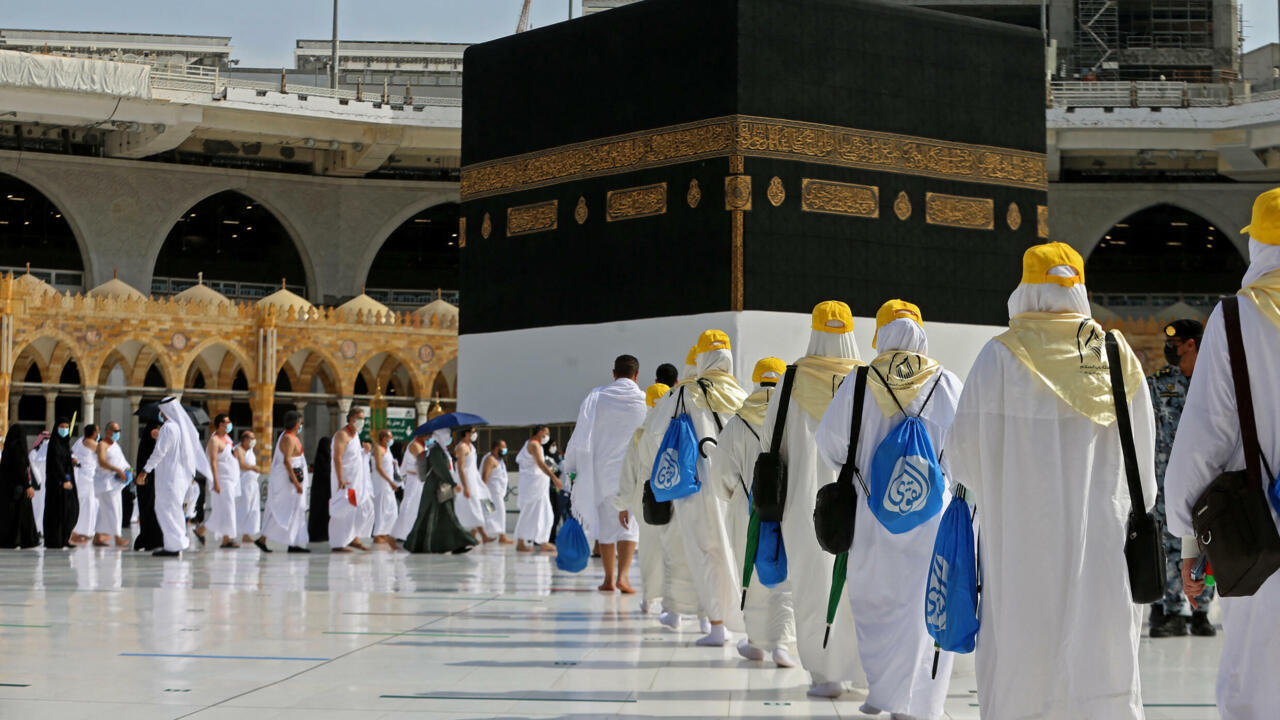
Health Challenges for Pilgrims October 5, 2025 Shako Tours and Travels is offering an extensive array of Umrah Packages include all essential services like Air Ticket booking, Visa Processing, Hotel accommodation, Food supply, internal transport between Makka and Medina, Hajj and Umrah Guide, Jiarah of Holy places etc. The price of packages are within your reach, affordable and attractive. We are ready to carry your burden regarding Umrah. You just relax and prepare yourself for performing Umrah. Performing Hajj and Umrah are laborious Ibadat/worship. It requires strength and good health. If you are planning to go to Makka for performing Hajj or Umrah, it’s recommended that you should make yourself fit for the spiritual journey. It is better to perform Hajj or Umrah at a relatively young age than at an older age. If you are interested to perform Hajj under government management, you are required to undergo a free health check-up through a medical board constituted by the civil surgeon of their respective district (or by the director of the medical college in districts where there is a medical college). A medical certificate must be collected. It is important to remember that taking meningitis injection is mandatory. If meningitis vaccine is not available at the district level, the injection can be taken from the medical board at the Hajj camp after reporting to the Hajj camp. No one can go for Hajj without a medical certificate. Those who will perform Hajj under private management are required to undergo health check-up by his own cost. You should remember that millions of people from every corner of the word are parking in the Hajj pilgrimage. These large crowds create chaos and increase the risk of transmitting and becoming infected by various illnesses that spread through close contact. More over large crowds in a small place may make someone suffocated. It is important for pilgrims to balance the physical and mental demands during the season as they brave the heat, physical exertion, and large crowds. To beat Health Challenges, take proper precautions. It also will help you to ensure your Hajj experience remains focused on worship rather than dealing with preventable health issues. Here are some tips for you to beat Health Challenges during Hajj and Umrah pilgrimage. Health Tips before Hajj or Umrah: Health Check-up before travelling to review your health status: Health Guidelines for Heart Patients: Visit the nearest health facility immediately if you experience: Any chest pain Shortness of breath Dizziness and unsteadiness Excessive sweating Pain that spreads from the chest to other areas such as the left arm or other areas (e.g., jaw, neck, or stomach) Health Guidelines for pilgrims who suffer from high blood pressure or blood pressure fluctuations: A normal blood pressure for adults is considered to be less than 120/80 mmHg, though readings between 90/60 mmHg and 120/80 mmHg are generally accepted as ideal or normal. The systolic pressure (top number) indicates the pressure when the heart beats, and the diastolic pressure (bottom number) is the pressure when the heart rests between beats. High blood pressure (hypertension) is a major risk factor for cardiovascular disease. Severely high blood pressure, can be life-threatening. Low blood pressure (hypotension)can cause dizziness, fainting and fall-related injuries. Severely low blood pressure limits blood flow to major organs and can lead to life-threatening complications like shock. Check your blood pressure at home or through physician if you feel, Severe headaches, Chest pain Shortness of breath, Back pain Numbness or weakness Vision changes Difficulty speaking Severe headaches Nosebleeds Confusion Dizziness Anxiety These are common symptom of High Blood Pressure. For preventing and managing high blood pressure you should, Eat a Heart-Healthy Diet: Focus on fruits, vegetables, lean proteins, and low-fat dairy products. Reduce Sodium: Limit salt and sodium intake. Increase Physical Activity: Aim for regular aerobic exercise to help lower blood pressure. Maintain a Healthy Weight: Losing excess weight can significantly impact blood pressure. Limit Alcohol: Reduce your alcohol intake, as no alcohol is generally best for heart health. Quit Smoking: Quitting smoking is a critical step for managing blood pressure. Manage Stress: Find ways to ease and manage stress in your life. You may have low blood pressure if you feel, Dizziness or light-headedness Fainting (syncope) Blurred or dim vision Nausea (feeling sick) General weakness or fatigue Confusion or difficulty concentrating Feeling unsteady These are common symptoms of Low Blood Pressure. For preventing and managing high blood pressure you should, Increase Fluids and Salt, Be Mindful When Changing Positions, Eat Small, Frequent Meals, Wear Compression Stockings, Avoid Triggers, Exercise Regularly To ensure a safe and healthy Hajj for those with high/low blood pressure, please follow these guidelines: Regularly monitor your blood pressure. Ensure you take your prescribed medications throughout the Hajj journey. Eat meals with low salt content. Avoid excessive consumption of tea or coffee. Avoid fast food and canned foods as they can cause high blood pressure. Avoid stress, anxiety, or excitement, especially when feeling fatigued, as they negatively affect blood pressure. Drink an adequate amount of water. Avoid direct exposure to sunlight as much as possible and use a protective umbrella. Get enough rest. Health Guidelines for Diabetic Patients: You probably have high sugar level if you experience the following symptoms, feeling or being sick. abdominal (tummy) pain. rapid, deep breathing. signs of dehydration, such as a headache, dry skin and a weak, rapid heartbeat. difficulty staying awake To control your blood sugar, you should Eat a healthy diet rich in fiber and low in processed foods, Avoid sugars and unhealthy fats, Maintain a healthy weight through regular physical activity, Manage stress, Prioritize good sleep, Stay hydrated by drinking plenty of water, Take medicine and inject insulin as per your doctor’s advice You probably have low sugar level if you experience the following symptoms: Mild to moderate symptoms Physical symptoms:Shaking, sweating, dizziness, headache, fast or pounding heart, and weakness. Cognitive and emotional symptoms:Feeling confused, anxious, irritable, or nervous. Sensory symptoms:Blurred vision or difficulty speaking clearly. Other symptoms:Intense hunger, tingling lips, or cold and clammy
Holy Places of Makka and Medina for Ziyarat
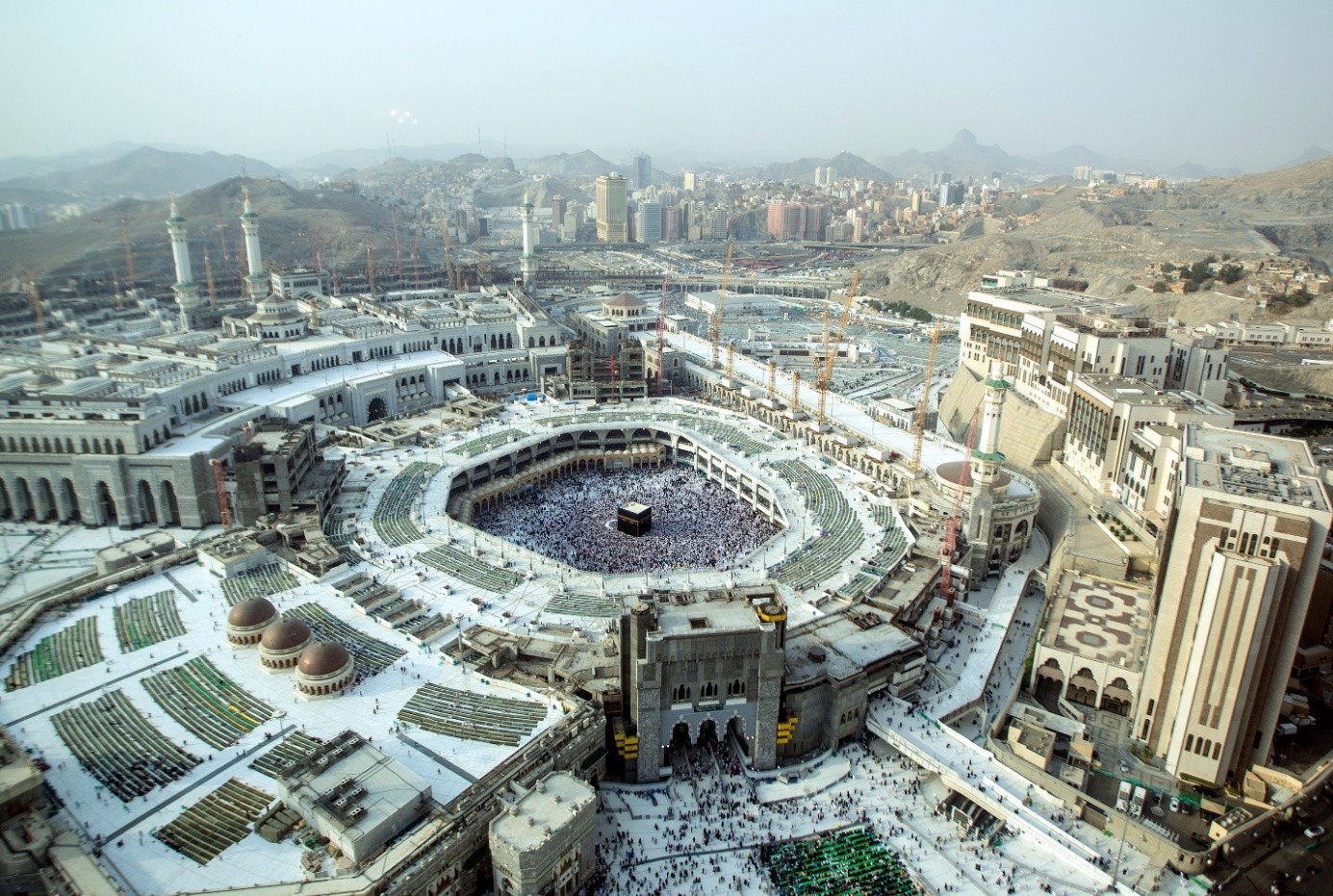
Holy Places of Makka and Medina for Ziyarat September 29, 2025 At Shako Tours and Travels, we offer a complete Umrah package that includes visits to sacred sites in Makkah and Medina. For those who choose our Mecca-Medina package. these special Ziyarat are part of the journey. we provide detailed information about one of these important sites. Umrah is a beautiful journey that allows Muslims to visit the sacred sites of Makkah and Medina. It is an act of love and a way to cleanse the soul. Umrah can be performed at any time of the year and involves specific rituals including Tawaf and Sa’i. Ziyarat in Makkah: Makkah, the birthplace of Prophet Muhammad (PBUH), is a city of religious and historical significance. Beyond its spiritual importance, Makkah is home to numerous historical sites that offer a glimpse into the rich heritage of Islam. Al-Masjid Al-Haram: The history of Al-Masjid Al-Haram goes back to its founding by Prophet Abraham and his son Ishmael. The sacred mosque has witnessed numerous renovations and expansions, reflecting its enduring significance as the holiest site in Islam. The Ka`bah continues to be the focal point for millions of Muslims worldwide. The Founding of Al-Masjid Al-Haram by Prophet Ibrahim Al-Masjid Al-Haram (the Sacred Mosque) is situated in Makkah, a city in the Arabian Peninsula 330 meters above sea-level. The history of the mosque goes back to its founding at the time of Ibrahim (Abraham) and his son Isma`il (Ishmael), peace be upon them both. Makkah is the place where the Prophet of Islam, Muhammad (peace and blessings of Allah be upon him) was born and where the Revelation began, and from which the light of Islam spread. Al-Masjid Al-Haram is located here. This is the first mosque that was built for people on earth, as Allah Says in the Quran (interpretation of the meaning): {Verily, the first House (of worship) appointed for mankind was that at Bakkah (Makkah), full of blessing, and a guidance for Al-`Alamin (mankind and jinns).} [Al `Imran 3:96] The Ka`bah: The Heart of Al-Masjid Al-Haram The Ka`bah – which is the direction of prayer for all Muslims throughout the world – is situated roughly in the middle of Al-Masjid Al-Haram. It is a 15-meter high stone structure more or less in the shape of a cube. It was built by Ibrahim (peace be upon him) on the command of Allah. Allah Says (interpretation of the meaning): {And (remember) when We showed Ibrahim the site of the (Sacred) House (the Ka`bah at Makkah) (saying): `Associate not anything (in worship) with Me, and sanctify My House for those who circumambulate it, and those who bow and make prostration.} [Al-Hajj 22:26] Allah also Says (interpretation of the meaning): {And (remember) when Ibrahim and (his son) Isma`il were raising the foundations of the House (the Ka`bah at Makkah)…} [Al-Baqarah 2:127] Rebuilding of the Ka`bah Over the Centuries Between the rebuilding of the Ka`bah and the beginning of the Revelation there were five years, and between the rebuilding and the Hijrah there were fifteen years. `Abd Ar-Razzaq (may Allah have mercy on him) reported from Mu`ammar from `Abdullah ibn `Uthman from Abu At-Tufayl, and from Mu`ammar from Az-Zuhri: ‘They were building it and when they reached Ar-Rukn (the black stone), Quraysh argued about which tribe should lift it up. Then they said, “Let us ask the first person who comes from this direction to judge between us.” They agreed on that, then the Messenger of Allah (peace and blessings of Allah be upon him) came to them, and he was a young man wearing a spotted sash. They asked him to judge between them, and he told them to place Ar-Rukn on a piece of cloth, then he told the chief of every tribe to hold the edge of the cloth, then he climbed up and they lifted Ar-Rukn up to him, and he himself (peace and blessings of Allah be upon him) put it into its place.” (End quote from Tarikh Makkah by Al-Azraqi, 1/161-164) Muslim (2374) reported that `A’ishah (may Allah be pleased with her) said: “I asked the Messenger of Allah (peace and blessings of Allah be upon him) about Al-Jadr and whether it was part of the House [the Ka`bah]. He said, ‘Yes.’ I asked, ‘So why is it not incorporated into the House?’ He said, ‘Your people ran out of money.’ I asked, ‘What about the door? Why is it high up?’ He said, ‘Your people did that so they could let in whomever they wanted and keep out whomever they wanted. If it were not for the fact that your people are still new [in Islam] and too close to their Jahiliyyah, and I am afraid that they would resent it, I would think of incorporating Al-Jadr into the House and bringing the door down to ground level.’” The Attack of Abrahah and Allah’s Divine Intervention Before Islam (in the year in which the Prophet (peace and blessings of Allah be upon him) was born), the Ka`bah was subjected to an attack by the Ethiopian Abrahah, who had built Al-Qulays, a church to which he wanted the Arabs to make their pilgrimage. He set out with his army, with whom was the elephant, and when they reached Makkah, Allah sent flocks of birds against them; each bird was carrying three stones like chickpeas or lentils, one in its beak and two in its claws. Every man who was struck by a stone was killed, so the army was destroyed, by the command of Allah. Allah has mentioned this incident in His Book, where He says (interpretation of the meaning): {Have you not seen how your Lord dealt with the Owners of the Elephant? Did He not make their plot go astray? And sent against them birds, in flocks, Striking them with stones of Sijjil, And He made them like eaten straw (in which the corn has been eaten up by cattle).} [Al-Fil 105:1-5] (End quote from As-Sirah An-Nabawiyyah by Ibn Hisham, 1/44-58) There was
Hajj and Umrah: A Journey of Faith and Devotion
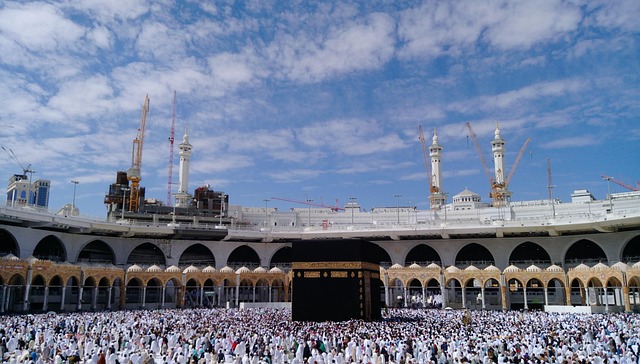
Every year, millions of Muslims from around the world make their way to the holy city of Makka in Saudi Arabia to perform two of the most profound acts of worship in Islam: Hajj and Umrah. These pilgrimages are not just physical journeys, but deeply spiritual experiences that mark a high point in a Muslim’s life, reflecting submission, sacrifice, and unity. The journey to the House of Allah is a unique invitation, which purifies the heart and calms the soul. The Quran says—“Perform Hajj and Umrah for the pleasure of Allah.” What is Hajj? Hajj is an Arabic word which means determination. Hajj is called Hajj to observe the Shariah in Baitullah, Meena, Arafah, Muzdalifah, Jamarah and Safa-Marwa. Hajj is an obligatory pillar of Islam performed annually during 8 to 12 Dhul-Hijja. Hajj is the major pilgrimage and one of the Five Pillars of Islam—making it a mandatory religious duty for every Muslim who is physically and financially capable of undertaking the journey at least once in whole life. Hajj commemorates the actions of Prophet Ibrahim (Abraham), Hagar, and Prophet Muhammad (PBUH), and it symbolizes humility, equality, and the ultimate submission to Allah. Key Facts About Hajj: Location: Mecca and surrounding areas (especially Mina, Arafat, and Muzdalifah) in Saudi Arabia. Timing: Takes place during the Islamic month of Dhul-Hijjah, specifically from the 8th to the 13th of the month. Obligation: It is fard (mandatory) for Muslims who meet the conditions (health, finances, safety). Major Rituals of Hajj: Ihram: Entering a state of spiritual purity, wearing special white garments. Tawaf: Circling the Kaaba in the Masjid al-Haram seven times. Sa’i: Walking seven times between the hills of Safa and Marwah. Standing at Arafat (Wuquf): The most important ritual, where pilgrims gather in prayer. Muzdalifah: Collecting pebbles for the next ritual. Ramy al-Jamarat: Throwing stones at three pillars symbolizing the devil. Eid al-Adha sacrifice: Pilgrims (and Muslims globally) sacrifice an animal to honor Prophet Ibrahim’s (Abraham’s) willingness to sacrifice his son. Final Tawaf (Tawaf al-Ifadah): Another circling of the Kaaba before leaving Step-by-step rituals: How to perform Hajj: Ihram, Tawaf, Sa’i, Arafat, Muzdalifah, Mina, stoning the Jamarat, Qurbani, farewell Tawaf: 8 Dhul-Hijjah – Day of Tarwiyah Re-enter Ihram with intention for Hajj. Proceed to Mina before noon. Perform five daily prayers there, stay overnight. 9 Dhul-Hijjah – Day of Arafah After Fajr in Mina, move to Arafat. From noon to sunset, remain in the plain of Arafat, offering du‘a and listening to the sermon. Pray Dhuhr and Asr shortened/combined. Standing at Arafat (Wuquf) is the central pillar of Hajj. Evening/Night – Muzdalifah After sunset leave Arafat calmly. At Muzdalifah, pray Maghrib and Isha combined, sleep under the open sky. Collect 49–70 small pebbles for the stoning ritual. 10 Dhul-Hijjah – Eid al-Adha Return to Mina. Stone the Jamarat al-Aqabah (largest pillar) with 7 pebbles. Offer the animal sacrifice (Qurbani). Men shave or trim hair; women trim. You may now wear regular clothing (partial release from ihram). Tawaf al-Ifadah & Sa’i Go to Makkah for Tawaf al-Ifadah (another seven circuits) and Sa’i between Safa and Marwah. This completes the major pillars of Hajj. 11–13 Dhul-Hijjah – Days of Tashreeq Stay in Mina. Each day after midday, stone all three Jamarat (small, middle, large) with seven pebbles each. You may leave after the 12th (called “afrad al-awwāl”) or remain through the 13th. Farewell Tawaf (Tawaf al-Wada) Before leaving Makkah, perform a final circumambulation of the Kaaba Duas (supplications) during performing Hajj: While Entering Ihram: Declare intention and devotion. Talbiyah (“Labbayk Allahumma Labbayk”): Repeat frequently until the first stoning at Mina. Duah (supplication): “Labbayk Allahumma Labbayk, Labbayk la sharika laka Labbayk, Innal hamda wanni’mata laka walmulk, La sharika lak” “Here I am, O Allah, (in response to Your call), here I am. Here I am, You have no partner, here I am. Indeed all the Praise, Grace and Sovereignty belong to You. You have no partner.” Entering Masjid Al-Haram: Upon entering the Sacred Mosque, pilgrims recite: “Allahumma Azillana tahta zilli ‘arshika yawma laa zilla illa zilluk…” which is a prayer for protection and for being given to drink from Prophet Muhammad’s pool. Day of Arafah: The best Dua on Arafah is the Talbiyah, but other important supplications include acknowledging Allah’s greatness and love to forgive, asking for forgiveness, for Jannah (paradise), protection from Hellfire, and for the Ummah (Muslim community). Day of Arafah (Prophetic Dua): A powerful Dua to make on Arafah is: “La ilaha illallahu wahdahu la sharika lahu, lahul-mulku wa lahul-hamdu wa huwa ‘ala kulli shay’in qadeer”. Farewell Tawaf: When making the farewell Tawaf, recite: “Ayibun, ta’ibun, ‘abidun, sajidun, lirabbina hamidun”. Means, “We return, repentant, worshipping, prostrating and praising Allah”. Significance: Spiritual cleansing: It is believed that a sincere Hajj cleanses a person of all past sins. Unity: Muslims from all over the world, regardless of nationality, race, or class, gather in one place, wearing the same clothing and performing the same rituals. What is Umrah? Umrah, often referred to as the “lesser or minor pilgrimage,” can be performed at any time of the year. It is not obligatory, but highly recommended and spiritually rewarding. Umrah is a sacred journey that holds immense significance in the hearts of all Muslims. It is a beloved Sunnah that offers a unique opportunity to refresh one’s faith and cleanse one’s soul. Pilgrims seek forgiveness, make sincere du’a and aim to gain a closer connection to Allah. The Prophet (SAW) encouraged us to perform Umrah at least once in our lifetime. Step-by-step rituals of Umrah: Umrah involves making your intention and assuming Ihram. It is then followed by entering the Masjid al-Haram and performing Tawaf. Entering the State of Ihram When/Where: Before crossing any Miqat (designated boundary around Makkah).Actions Perform ghusl (full ritual bath) or wudhu. Wear the special garments (Ihram) Men: two unstitched white cloths (lower “izar,” upper “rida”). Women: modest dress that covers everything except face and hands. Pray two rakʿahs if possible. Make intention (niyyah) for Umrah: “O Allah,