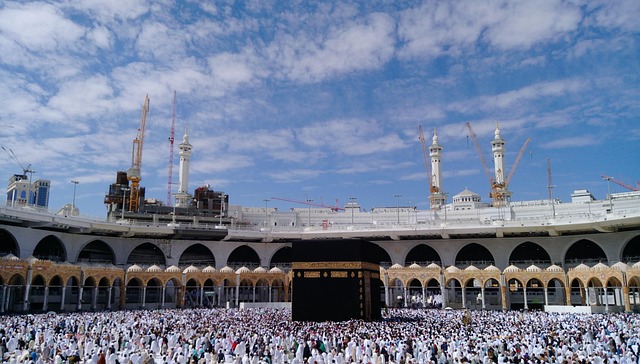
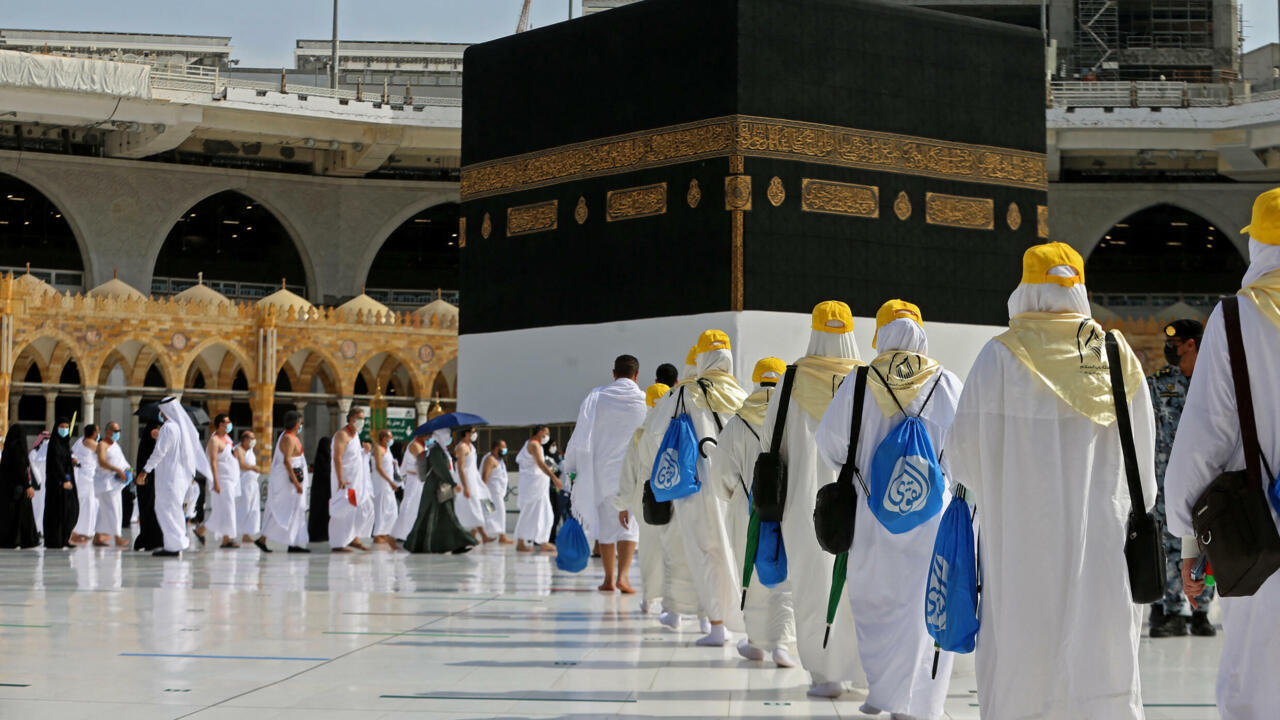
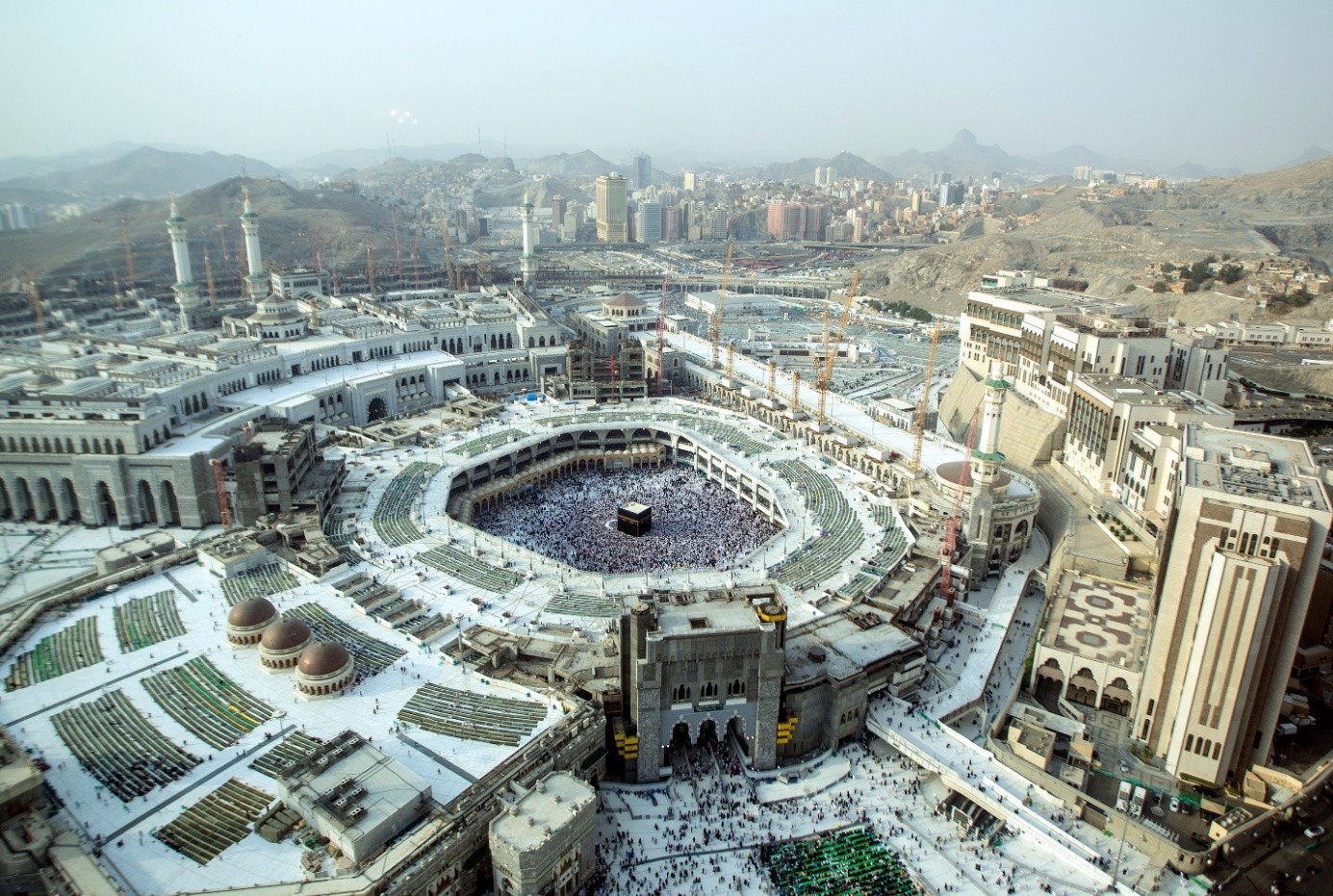
At Shako Tours and Travels, we offer a complete Umrah package that includes visits to sacred sites in Makkah and Medina. For those who choose our Mecca-Medina package. these special Ziyarat are part of the journey. we provide detailed information about one of these important sites. Umrah is a beautiful journey that allows Muslims to visit the sacred sites of Makkah and Medina. It is an act of love and a way to cleanse the soul. Umrah can be performed at any time of the year and involves specific rituals including Tawaf and Sa’i.
Ziyarat in Makkah:
Makkah, the birthplace of Prophet Muhammad (PBUH), is a city of religious and historical significance. Beyond its spiritual importance, Makkah is home to numerous historical sites that offer a glimpse into the rich heritage of Islam.
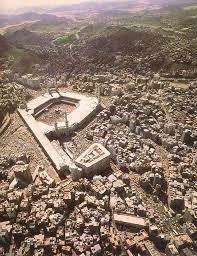
The history of Al-Masjid Al-Haram goes back to its founding by Prophet Abraham and his son Ishmael. The sacred mosque has witnessed numerous renovations and expansions, reflecting its enduring significance as the holiest site in Islam. The Ka`bah continues to be the focal point for millions of Muslims worldwide.
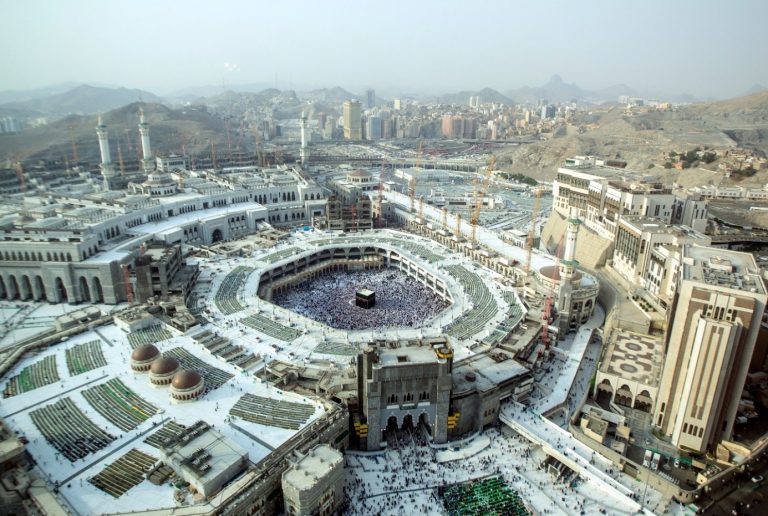
The Founding of Al-Masjid Al-Haram by Prophet Ibrahim
Al-Masjid Al-Haram (the Sacred Mosque) is situated in Makkah, a city in the Arabian Peninsula 330 meters above sea-level. The history of the mosque goes back to its founding at the time of Ibrahim (Abraham) and his son Isma`il (Ishmael), peace be upon them both.
Makkah is the place where the Prophet of Islam, Muhammad (peace and blessings of Allah be upon him) was born and where the Revelation began, and from which the light of Islam spread. Al-Masjid Al-Haram is located here. This is the first mosque that was built for people on earth, as Allah Says in the Quran (interpretation of the meaning):
{Verily, the first House (of worship) appointed for mankind was that at Bakkah (Makkah), full of blessing, and a guidance for Al-`Alamin (mankind and jinns).} [Al `Imran 3:96]
The Ka`bah: The Heart of Al-Masjid Al-Haram
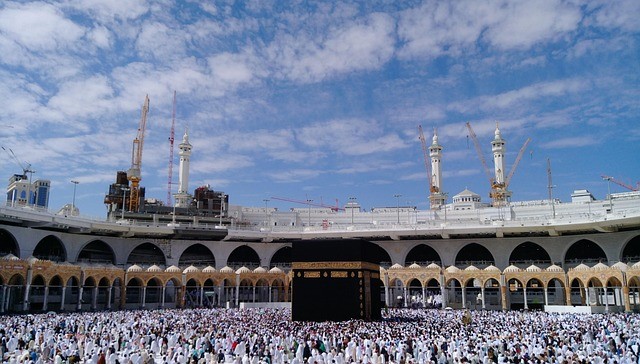
The Ka`bah – which is the direction of prayer for all Muslims throughout the world – is situated roughly in the middle of Al-Masjid Al-Haram. It is a 15-meter high stone structure more or less in the shape of a cube. It was built by Ibrahim (peace be upon him) on the command of Allah. Allah Says (interpretation of the meaning):
{And (remember) when We showed Ibrahim the site of the (Sacred) House (the Ka`bah at Makkah) (saying): `Associate not anything (in worship) with Me, and sanctify My House for those who circumambulate it, and those who bow and make prostration.} [Al-Hajj 22:26]
Allah also Says (interpretation of the meaning):
{And (remember) when Ibrahim and (his son) Isma`il were raising the foundations of the House (the Ka`bah at Makkah)…} [Al-Baqarah 2:127]
Rebuilding of the Ka`bah Over the Centuries
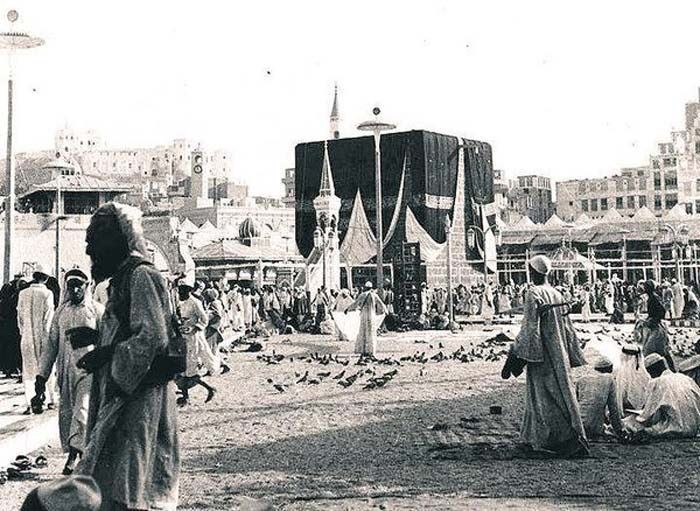
Between the rebuilding of the Ka`bah and the beginning of the Revelation there were five years, and between the rebuilding and the Hijrah there were fifteen years.
`Abd Ar-Razzaq (may Allah have mercy on him) reported from Mu`ammar from `Abdullah ibn `Uthman from Abu At-Tufayl, and from Mu`ammar from Az-Zuhri: ‘They were building it and when they reached Ar-Rukn (the black stone), Quraysh argued about which tribe should lift it up. Then they said, “Let us ask the first person who comes from this direction to judge between us.” They agreed on that, then the Messenger of Allah (peace and blessings of Allah be upon him) came to them, and he was a young man wearing a spotted sash. They asked him to judge between them, and he told them to place Ar-Rukn on a piece of cloth, then he told the chief of every tribe to hold the edge of the cloth, then he climbed up and they lifted Ar-Rukn up to him, and he himself (peace and blessings of Allah be upon him) put it into its place.” (End quote from Tarikh Makkah by Al-Azraqi, 1/161-164)
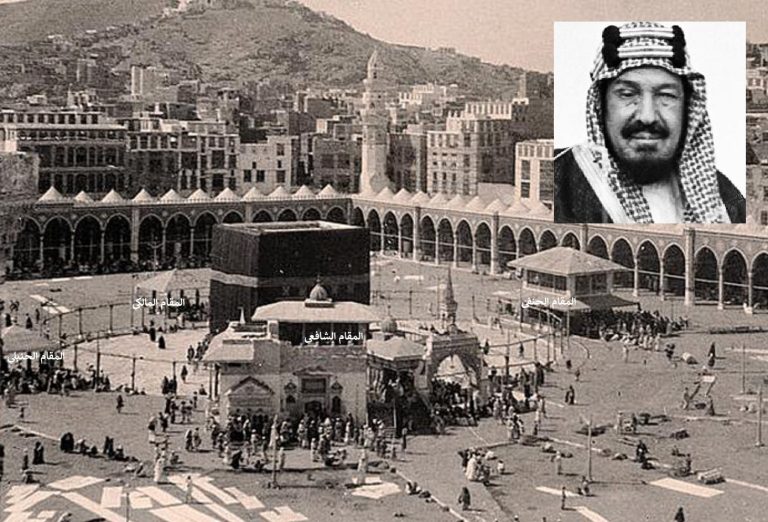
Muslim (2374) reported that `A’ishah (may Allah be pleased with her) said: “I asked the Messenger of Allah (peace and blessings of Allah be upon him) about Al-Jadr and whether it was part of the House [the Ka`bah]. He said, ‘Yes.’ I asked, ‘So why is it not incorporated into the House?’ He said, ‘Your people ran out of money.’ I asked, ‘What about the door? Why is it high up?’ He said, ‘Your people did that so they could let in whomever they wanted and keep out whomever they wanted. If it were not for the fact that your people are still new [in Islam] and too close to their Jahiliyyah, and I am afraid that they would resent it, I would think of incorporating Al-Jadr into the House and bringing the door down to ground level.’”
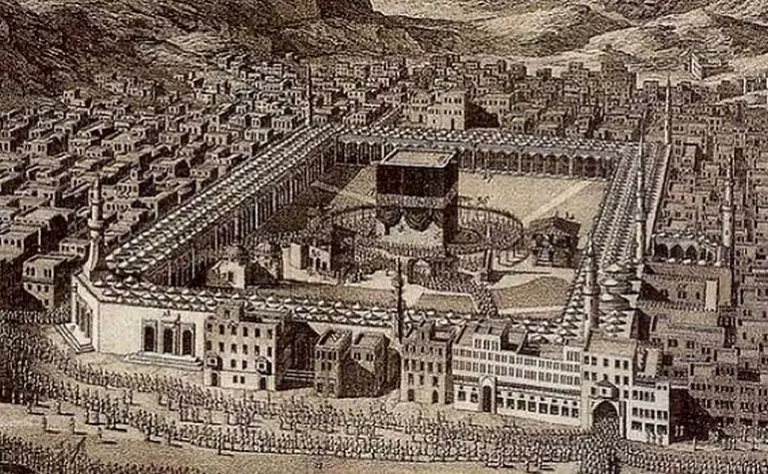
The Attack of Abrahah and Allah’s Divine Intervention
Before Islam (in the year in which the Prophet (peace and blessings of Allah be upon him) was born), the Ka`bah was subjected to an attack by the Ethiopian Abrahah, who had built Al-Qulays, a church to which he wanted the Arabs to make their pilgrimage. He set out with his army, with whom was the elephant, and when they reached Makkah, Allah sent flocks of birds against them; each bird was carrying three stones like chickpeas or lentils, one in its beak and two in its claws. Every man who was struck by a stone was killed, so the army was destroyed, by the command of Allah.
Allah has mentioned this incident in His Book, where He says (interpretation of the meaning):
{Have you not seen how your Lord dealt with the Owners of the Elephant? Did He not make their plot go astray? And sent against them birds, in flocks, Striking them with stones of Sijjil, And He made them like eaten straw (in which the corn has been eaten up by cattle).} [Al-Fil 105:1-5] (End quote from As-Sirah An-Nabawiyyah by Ibn Hisham, 1/44-58)
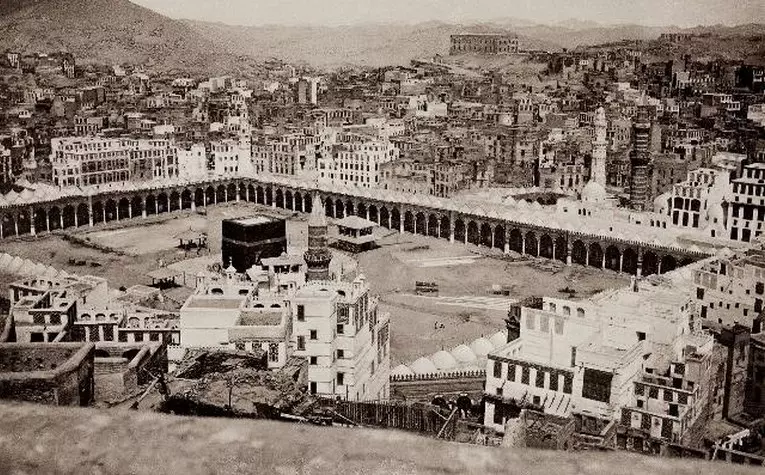
There was no fence or wall around the Ka`bah until it became necessary. Yaqut Al-Hamawi said in Mu’jam Al-Buldan (5/146): “The first one to build a wall around the Ka`bah was `Umar ibn Al-Khattab (may Allah be pleased with him); there was no wall around it during the time of the Prophet (peace and blessings of Allah be upon him) or Abu Bakr.
[The wall was built] because people were building their houses too close to the Ka`bah and making the space around it too small for people. `Umar said: ‘The Ka`bah is the House of Allah, and a house needs a courtyard. You have encroached on its space, it has not encroached on yours.’ So he bought those houses, demolished them and added that space to the space around the Ka`bah. He also destroyed the houses of people in the vicinity of the Ka`bah who had refused to sell, and kept the money aside for them until they came and took it later on. He built a wall around the mosque, lower than the height of a man, and lamps were placed on it. When `Uthman was caliph, he bought more houses that were more expensive… It was said that `Uthman was the first one to build porticos around it … When Ibn Az-Zubayr was in power, he improved its appearance, although he did not increase its size, by adding marble pillars, extra doors and other improvements. When `Abd Al-Malik ibn Marwan was caliph, he added to the wall of the mosque, and brought columns from Egypt by sea to Jeddah, which were carried from Jeddah to Makkah on wheels. Al-Hajjaj ibn Yusuf commanded that the Ka`bah should be covered in drapes (Al-Kiswah) and when Al-Walid ibn `Abd Al-Malik was caliph, he added to the adornment of the Kiswah and spent money on improvements to the drainage spout and roof… When Al-Mansur and his son Al-Mahdi were caliphs, they added more adornments to the mosque and improved its appearance.”
At Shako Tours and Travels, our goal is to achieve the pleasure of Allah through the service of the pilgrims. Not cost, but worship and service are the objective measures of our success. Our specialty is Hajj and Umrah packages. We are committed to our trusted partners in crafting seamless and memorable travel adventures.
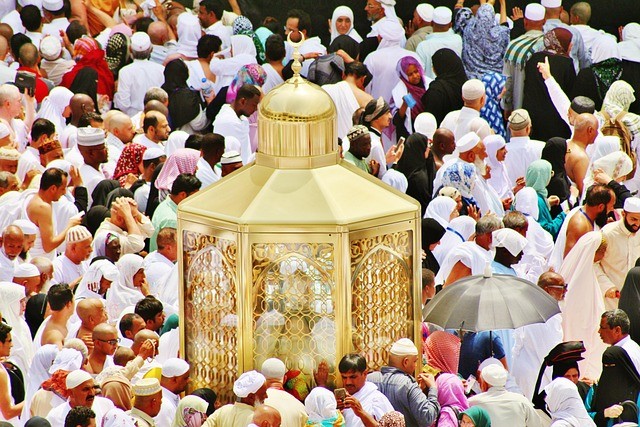
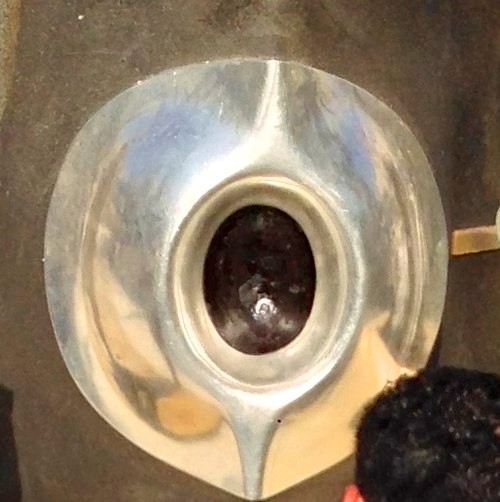


There are also other religious monuments in the Mosque, such as Maqam Ibrahim (the Station of Ibrahim), which is the rock on which Ibrahim (peace be upon him) stood whilst he was building the Ka`bah.
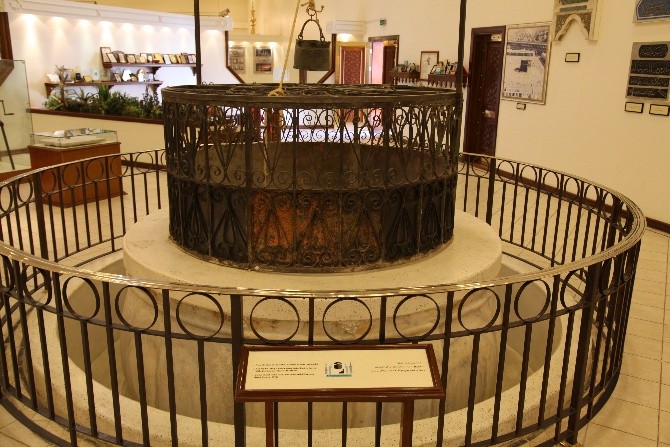
There is also the Well of Zamzam, which is a spring of water brought forth by Allah for Hajar and her child Isma`il (peace be upon him) when he got thirsty
We should not forget either the Black Stone and Al-Ar-Rukn Al-Al-Yamani, which are two of the precious stones of Paradise.
At-Tirmidhi and Ahmad reported that `Abdullah ibn `Amr (may Allah be pleased with him) said: “I heard the Messenger of Allah (peace and blessings of Allah be upon him) saying that the Rukn and the Maqam are two of the precious stones of Paradise, whose light has been extinguished by Allah. If He had not
Features of Al-Masjid Al-Haram
One of the unique features of the Mosque is that it is the only mosque in the world to which people come on pilgrimage (Hajj). Allah Says (interpretation of the meaning):
Verily! As-Safa and Al-Marwah are of the Symbols of Allah. So it is not a sin on him who performs Hajj or `Umrah (pilgrimage) of the House to perform the going (Tawaf) between them. And whoever does good voluntarily, then verily, Allah is All-Recognizer, All-Knower.} [Al-Baqarah 2:158]
Another of its unique features is that Allah has made it safe, and one prayer in it is equal to a hundred thousand prayers elsewhere. Allah says (interpretation of the meaning):
{And (remember) when We made the House a place of resort for mankind and a place of safety. And take you (people) the Maqam (place) of Ibrahim as a place of prayer, and We commanded Ibrahim and Isma`il that they should purify My House for those who are circumambulating it, or staying (I`tikaf), or bowing or prostrating themselves.} [Al-Baqarah 2:125], {In it are manifest signs (for example); whoever enters it, he attains security. And Hajj to the House is a duty that mankind owes to Allah, those who can afford the expenses (for one’s conveyance, provision and residence); and whoever disbelieves [i.e., denies Hajj, then he is a disbeliever of Allah], then Allah stands not in need of any of the `Alamin (mankind and jinns).} [Al `Imran 3:97] (Akhbar Makkah by Al-Al-Azraqi and Akhbar Makkah by Al-Al-Fakihi)
2. Muzdalifah:
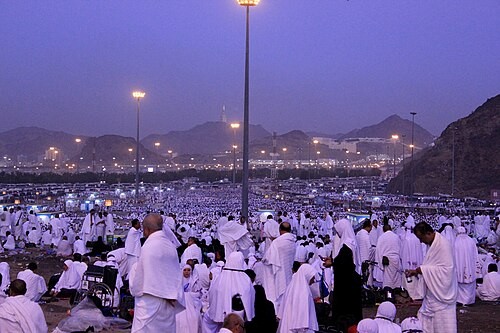
Muzdalifah is an open and level area near Makka in the Hejazi region of Saudi Arabia that is associated with the Ḥajj. It lies just southeast of Mina, on the route between Mina and Arafat.
In Pre-Islamic times the Hums being the Quraysh, Banu Kinanah, Banu Khuza’a and Banu ‘Amir would camp at Muzdalifah and refuse to go to Mount Arafat with the other Arabs. With the coming of Islam, the Hums were reprimanded for this behaviour and told to depart with the other Arabs in Quran 2:199.
Key Aspects of Muzdalifah
Environment:It is an open area with no tents or fixed accommodations; pilgrims spend the night under the open sky.
3. Mina:
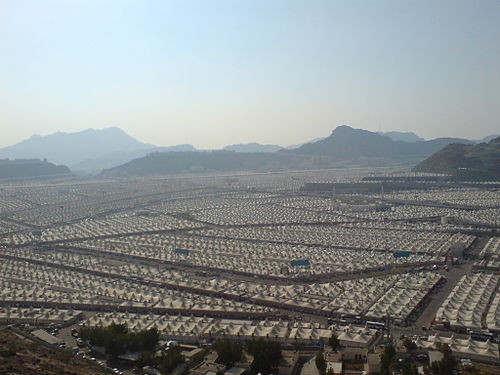
Mina is a tent city and holy site for Hajj pilgrims, located near Makkah, where pilgrims stay in fire-resistant tents for several days, primarily on the 8th and remaining days of Dhul-Hijjah. Key rituals performed in Mina include the symbolic Ramy al-Jamarat (stoning of the devil) by throwing pebbles at three pillars and spending nights in prayer and reflection, preparing for the subsequent rituals of Hajj.
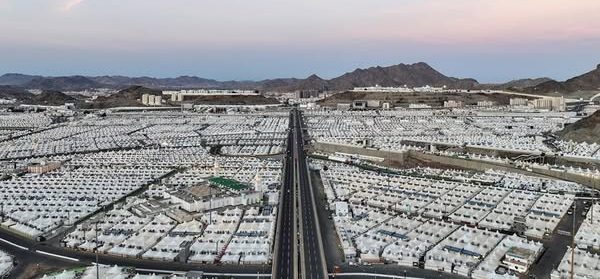
What is Mina?
Significance During Hajj
On the 8th of Dhul-Hijjah, the first day of Hajj, pilgrims move to Mina to rest, pray, and prepare for the main rituals.
Pilgrims perform the stoning of the devil by throwing pebbles at three stone pillars that symbolize the devil’s temptations to Prophet Ibrahim (AS).
Pilgrims spend nights in Mina on the 8th and can return after the Arafat and Muzdalifah days, on the 11th and sometimes 12th or 13th of Dhul-Hijjah.
The time spent in Mina is crucial for spiritual reflection and reaffirming one’s commitment to Allah before proceeding to the other significant sites of Hajj.
4. Mount Arafat:
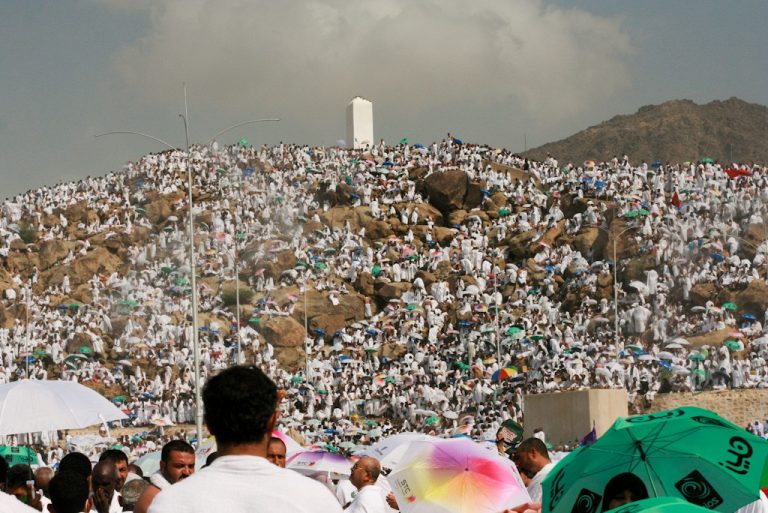
Mount Arafat is where pilgrims perform wuquf (standing in prayer and devotion) during Hajj, a ritual considered the spiritual apex and most essential pillar of Hajj. Pilgrims gather on the plain of Arafat on the 9th day of Dhu Al Hijja to seek forgiveness, praise God, and engage in reflection, an act believed to be a preview of the Day of Judgment. The day marks the time Prophet Muhammad is said to have delivered his final sermon, making it a focal point for intense prayer and spiritual significance.
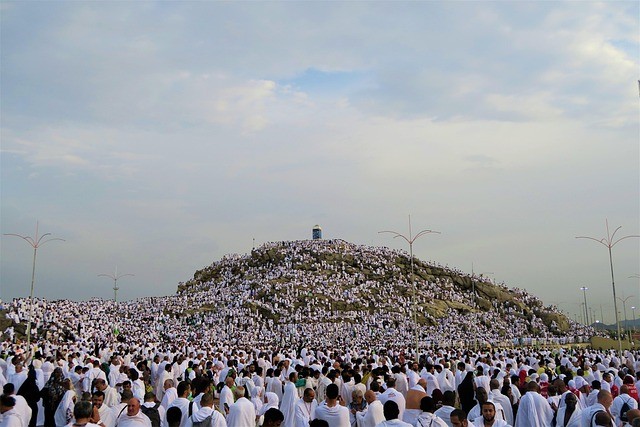
Key Aspects of Mount Arafat during Hajj:
Significance for Muslims:
5. Jabal Al-Nour Mountain and Cave of Hira:
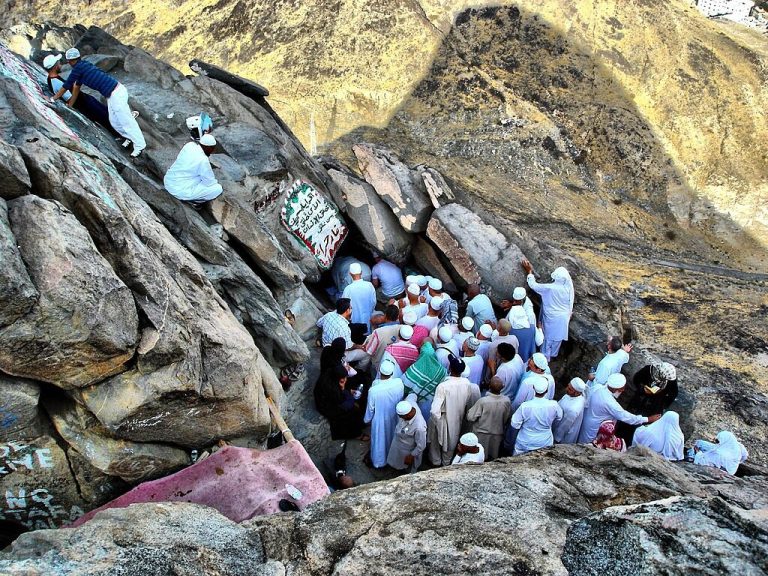
Jabal al-Nour (the “Mountain of Light”) is a mountain in Makka, Saudi Arabia, and the Cave of Hira is located at its summit. This sacred site is profoundly significant in Islam because the Hazrat Muhammad (SW) meditated there and received his first divine revelations from the Jibreel Feresta. The cave entrance faces the north, and the interior is oriented towards the Kaaba, making the physically demanding climb to the summit a spiritually rewarding experience for pilgrims and visitors.
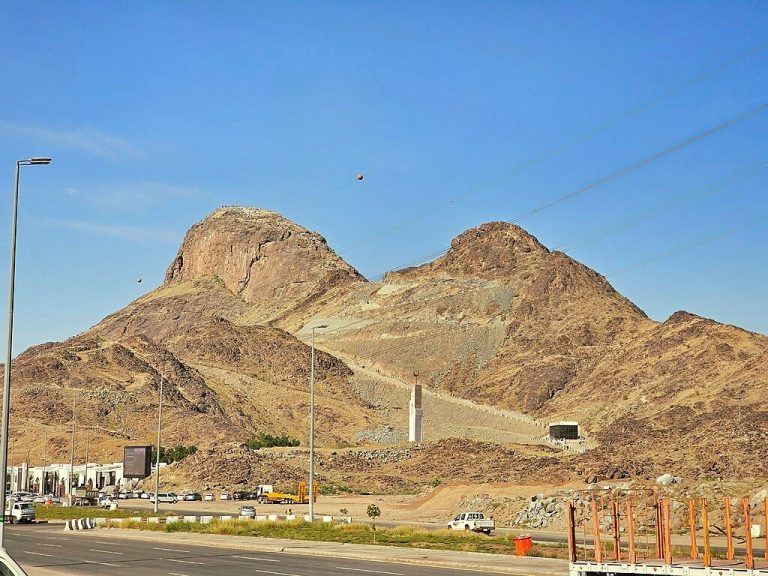
Jabal al-Nour (Mountain of Light)
The Cave of Hira
Visitor Experience
Hira Cultural District: Hira Cultural District is a one-of-a-kind destination in Makkah. Set at the foot of Mount Hira, it offers exhibitions, museums, and experiences that bring the story of the first revelation to life. It’s a place to spend time, explore freely, and enjoy everything you need for a comfortable visit.
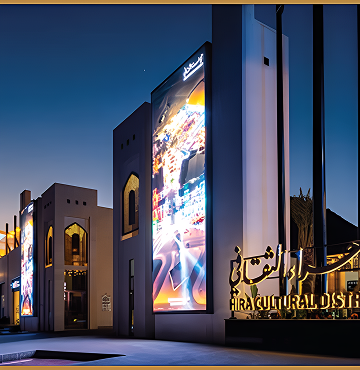
It is a significant cultural and tourist attraction located next to Jabal Al-Nour, home of Hira Cave. It tells the story of the divine revelation and offers insights into the historical importance of the mountain and the cave. Hira Cultural District enriches visitors’ cultural and educational experiences through its diverse facilities. Hira Cultural District Facilities include:
6. Jabal Thawr:
Jabal Thawr (Mount Thawr) is a mountain in Saudi Arabia, located south of Makka, renowned for the Ghār Thawr (Cave of Thawr) at its summit, where Prophet Muhammad (PBUH) and his companion Abu Bakr took refuge for three days from the Quraysh during their Hijra (migration) to Medina.
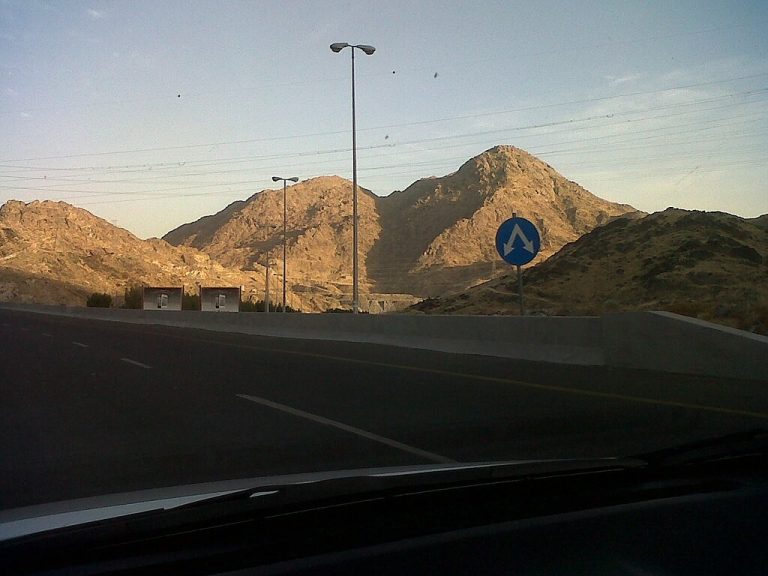
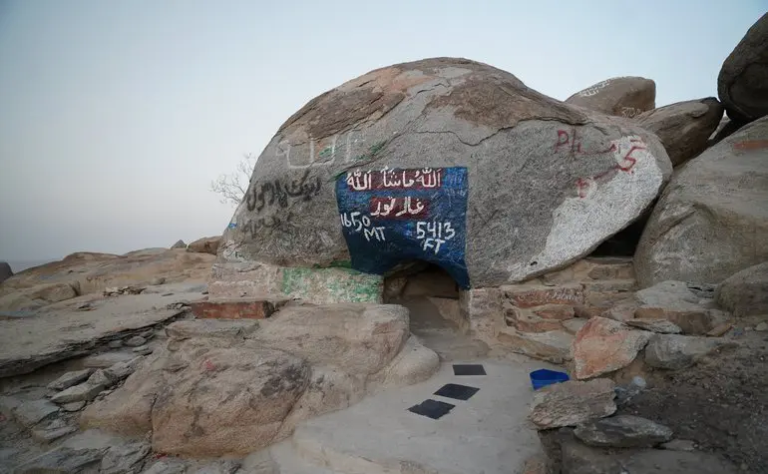
The mountain is a significant pilgrimage site for Muslims, symbolizing faith and divine protection, as Allah (SWT) protected them from their enemies with a spider’s web at the cave’s entrance. A steep but rewarding climb to the cave offers panoramic views of the surrounding area.
Visiting Jabal Thawr
7. Mosque of the Jinn:
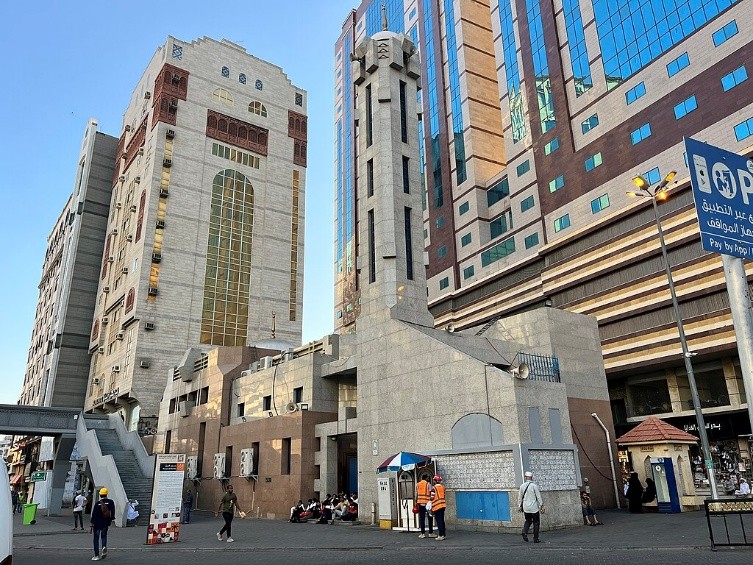
The “Mosque of the Jinn” (Masjid al-Jinn) is a historic mosque located in Makka, Saudi Arabia, significant for its connection to the Islamic belief in jinn. It was built in the second century of the Hijri calendar and has undergone renovations over time. The mosque is built at the place where a group of jinn are said to have gathered one night to hear the recitation of a portion of the Quran by Muhammad. Muhammad later met there with these jinn’s leaders and accepted their embrace of Islam and their bay’ah (oath of allegiance) to him. The incident is mentioned in Sura al-Jinn of the Quran. The mosque is considered one of the oldest in Mecca and is one of the most important mosques visited in the city.
8. Masjid-e-Taneem:
Masjid-e-Taneem, or Al-Taneem Mosque, is an important historical mosque in Mecca, Saudi Arabia, also known as Masjid Aisha, named after Aisha, the wife of the Prophet Muhammad. It is located on a Shariah boundary of the Haram, serving as a miqat for residents of Makka to enter the state of Ihram for Umrah or Haj. The Al-Taneem Mosque, located 7 km northwest of Makkah and 7.5 km north of the Grand Mosque, holds historical significance for Muslims performing Umrah. Built in 854, it is where Aisha bint Abu Bakr, wife of Prophet Muhammad, entered Ihram during the Farewell Pilgrimage in 632.
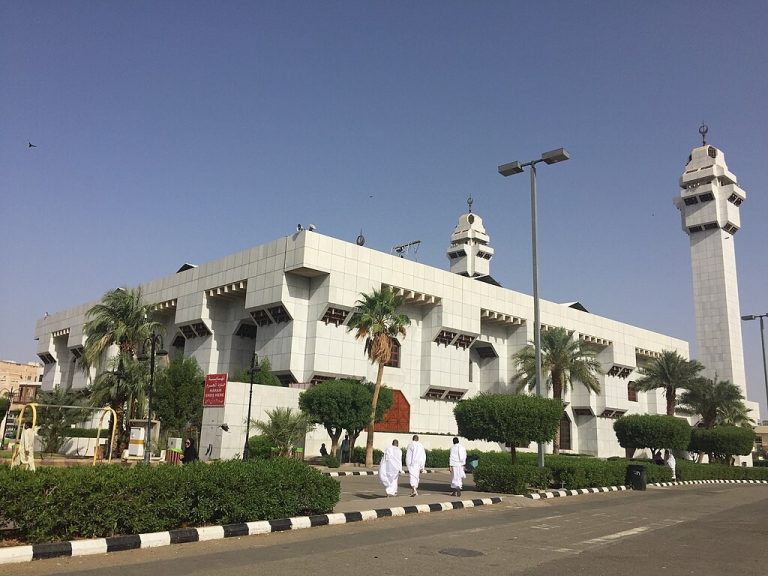
This was allowed by the prophet as a special case when Aisha could not complete her umra on account of being in an impure state due to menstrual period. Aisha’s brother who accompanied her to Taneem and back did not perform another umra along with his sister, understanding that it was a special allowance made for Aisha or any woman who happens to become impure, due to her menstrual period. Nowadays It is the nearest and most convenient location to enter into Ihram for those residing within the boundaries of the Haram. The Aisha Mosque is quite big, with facilities for baths, ablution and changing, available for pilgrims and those who come to offer regular prayers. Welcomes worshipers year-round and is easily accessible by public transport or private vehicles.
9. Jannat al-Mu’alla:
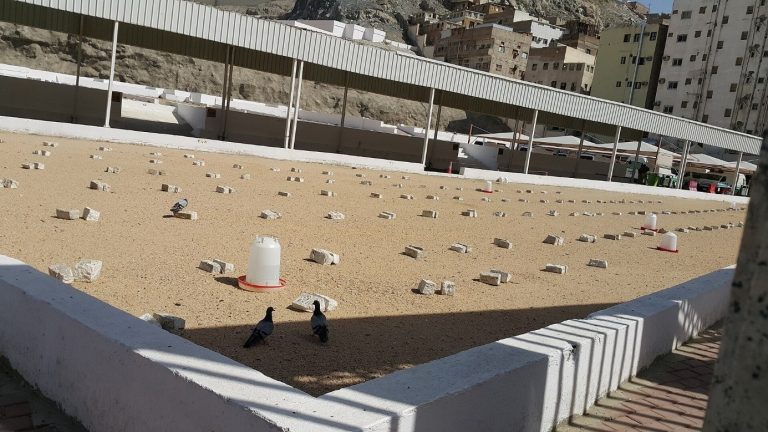
Jannat al-Mu’alla (or Al-Ma’la) is an ancient and sacred cemetery in Makkah, Saudi Arabia, known as the burial place for several important figures in early Islam, including Prophet Muhammad’s first wife, Khadijah; his grandfather, Abdul Muttalib; and his uncle, Abu Talib. Located near the Grand Mosque, the historical site features simple rock markers instead of traditional graves or tombs, as many structures were demolished in 1925. The same year that the Jannat al-Baqi’ cemetery in Medina was demolished by the Saudi King, Ibn Saud. According to Wahabi tradition of Sunni Islam, shrines are forbidden to be built over a grave so as to not take any saint or dead person for worship. This happened despite protests by the international Shia community. Some Shiites continue to mourn the day the House of Saud demolished shrines in Al-Baqi, which has been named Yaum-e Gham or “Day of Sorrow”, and protest the Saudi government’s demolition of these shrinesVisitors pay their respects to the entire area, which serves as a tangible connection to the origins of Islam and a place of great reverence. The site is open to visitors, with free access year-round. Visitors are expected to maintain a dignified demeanor and observe religious sensitivities.
10. Ayn Zubaydah:
Ayn Zubaydah is an ancient, 38 km long water conduit system commissioned by Zubaida bint Ja’far, wife of Abbasid Caliph Harun al-Rashid, in 801 CE to provide a permanent water supply to the holy sites of Makkah and its surrounding areas. The system, which includes underground channels and aboveground aqueducts, served pilgrims and residents for over 1,200 years and is considered a historical landmark in Makkah. The project was initiated by Zubaida after her Hajj pilgrimage in 186 AH (801 CE), when she recognized the dire need for water for pilgrims. The system provided water for 1,200 years, supporting the holy sites of Makkah (including Arafat, Mina, and Muzdalifah), as well as nearby farms and residential areas. Ayn Zubaydah is a testament to the ingenuity of its architects and builders, featuring a complex network of underground channels, aqueducts, and reservoirs.
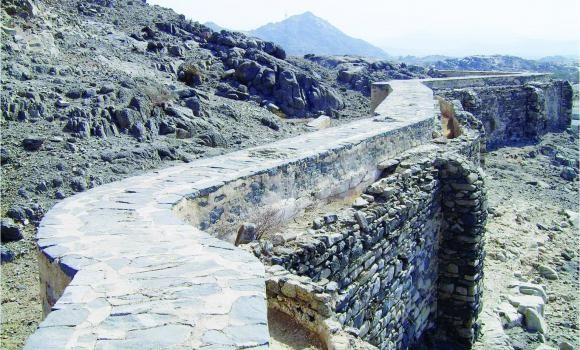
A department was created during the reign of King Abdulaziz to oversee the spring and its associated wells, ensuring its maintenance. The water system begins at Jabal Kara near Al-Taif, diverting from the “Ayn Wadi Numan” flow. The system consists of a series of underground canals (qanats) and aboveground aqueducts, strategically placed to channel water to Makkah. The network spans approximately 35-38 kilometers, featuring 132 inspection chambers along its route.
11. Kiswa Factory:
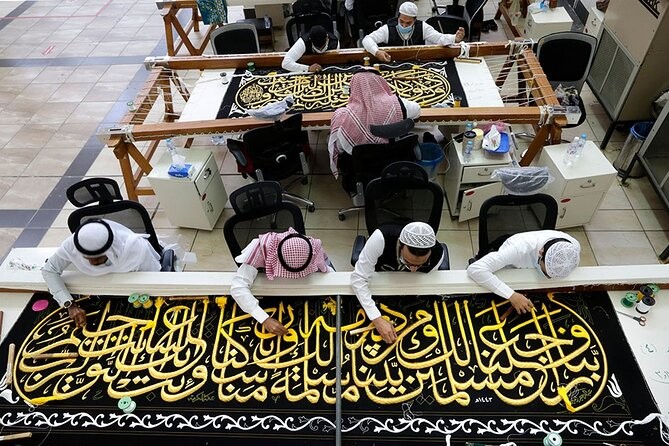
The kiswah or kiswa is the cloth that covers the Kaaba in Makka, Saudi Arabia. It is draped annually, though the date of draping has changed over the years. A procession traditionally accompanies the kiswah to Makka, a tradition dating back to the 12th century. The term kiswah has multiple translations, with common ones being ‘robe’ or ‘garment’. Due to the iconic designs and the quality of materials used in creating the kiswah, it is considered one of the most sacred objects in Islamic art, ritual, and worship. The annual practice of covering the Kaaba has pre-Islamic origins and was continued by Muhammad and his successors. Historically, various types of cloth and textiles have been used as draping, but Egyptian produced kiswahs were popularized by early Islamic rulers. The Kiswa Factory of the Holy Kaaba, was renamed in 2018 by royal decree issued by King Salman to the King Abdulaziz Complex for the Holy Kaaba Kiswa. The King Abdulaziz Complex for Holy Kaaba Kiswa is a specialized facility in Makka, responsible for producing the Kiswah, the black silk covering adorned with Quran verses that envelops the Kaaba in the Masjid al-Haram. The complex oversees the design, manufacturing, and annual replacement of the Kiswah, a significant religious and cultural tradition in Islam.

A visit to the complex offers a rare opportunity to witness the meticulous artistry behind one of the Islamic world’s most revered symbols. Over 200 skilled artisans work across departments including machine and hand embroidery, silk weaving, gold threadwork, printing, and final assembly. Visitors can explore these various stages of production, gaining insight into the delicate processes that culminate in the annual replacement of the Kiswa.
12. Abraj Al-Bait Towers:
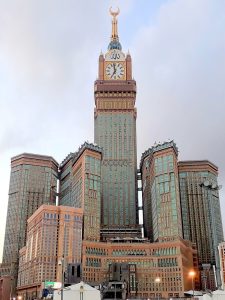
the Makkah Tower is the tallest clock tower in the world, and the complex of seven buildings comprise the world’s second most expensive building. The clock faces are the largest in the world, and the top four floors of the clock tower house the Clock Tower Museum.
The building complex is 300 metres away from the world’s largest mosque and Islam’s most sacred site, the Great Mosque of Makka. The developer and contractor of the complex is the Saudi Binladin Group, the Kingdom’s largest construction company. The total cost of construction totaled US$15 billion. The complex was built after the demolition of the Ajyad Fortress, the 18th-century Ottoman citadel on top of a hill overlooking the Grand Mosque. The destruction of the historically significant site in 2002 by the Saudi government sparked an outcry and a strong reaction from Turkey.
The tallest tower in the complex also contains a five-star hotel, operated by Fairmont Hotels and Resorts, to help provide lodging for the millions of pilgrims that travel to Mecca annually to participate in the Hajj.
In addition, The Clock Towers has a five-story shopping mall (The Clock Towers Shopping Center) and a parking garage capable of holding over a thousand vehicles.
13. Taif:
Taif is a circulated or an encircled city and governorate. Located at an elevation of 1,879 m (6,165 ft) in the slopes of the Hijaz Mountains, which themselves are part of the Sarat Mountains, the city has a population of 563,282 people in 2022, making it one of the most populous cities in the kingdom.
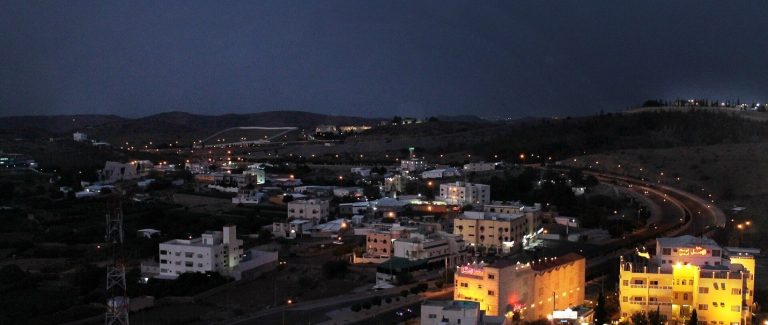
There is a belief that Taif is indirectly referred to in Quran 43:31. The city was visited by the Hazrat Muhammad (SWS), sometime in the early 7th century, and was inhabited by the tribe of Banu Thaqif. It is still inhabited to this day by their descendants. As a part of the Hejaz, the city has seen many transfers-of-power throughout its history, with the last being during the Saudi conquest of Hejaz in 1925. The city has been called the unofficial summer capital and has also been called the best summer destination as it enjoys a moderate weather during summer. The city is connected to the nearby resort town of Al-Hada via the iconic Highway 15 (Taif – Al-Hada Road). It stands out from the rest of the Hijazi region as it is a city that plays an active role in the agricultural output of Saudi Arabia and is the center of an agricultural area known for its cultivation of grapes, pomegranate, figs, roses and honey. Taif is also very active in the manufacturing of traditional attar, and is known locally as “City of the Roses”. Taif also hosts the historic Souq ‘Okaz.
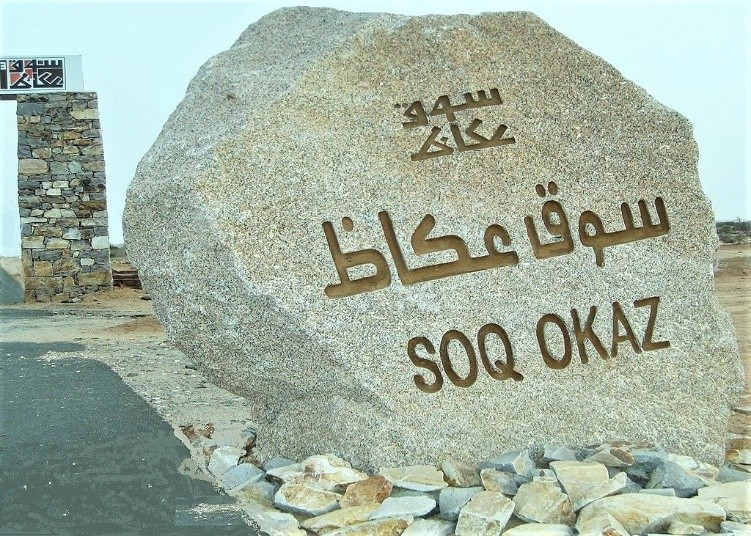
Sūq ʿUkāẓ was a seasonal market which operated for twenty-one days each year during the month of Dhu al-Qa’dah prior to the annual Hajj pilgrimage.It competed with the fairs of Majanna and Dhu ’l-Majaz̄, which were also held near Mecca at the same time of year. It was active from approximately 542-726 CE. Strategically located at a central point on the Spice Route through Western Arabia, its growth in the sixth century was partly caused by the Byzantine-Persian wars, which made it
harder for Mediterranean markets to access Mesopotamian trade-routes. The market of ʿUkāẓ was an important center where Arabs would meet to formalize tribal rules, settle disputes, pass judgments, make agreements, announce treaties and truces, hold sporting competitions and races, poetry competitions, and religious gatherings; it has been compared in this respect to the ancient Greek institution of the panegyrists. It was especially important for poetry competitions, which served to formalize rules of Arabic language verse, grammar and syntax.
Ziyarat in Medina:
Medina, officially al-Madinah al-Munawwarah, also known as Taybah and known in pre-Islamic times as Yathrib, is the capital and administrative center of Medina Province in the Hejaz region of western Saudi Arabia. It is one of the oldest and most important places in Islamic history. Around 58.5% of the population are Saudi citizens and 41.5% are foreigners. Located at the core of the Medina Province in the western reaches of the country, the city is distributed over 589 km2 (227 sq mi), of which 293 km2 (113 sq mi) constitutes the city’s urban area, while the rest is occupied by the Hejaz Mountains, empty valleys, agricultural spaces and older dormant volcanoes.
Our Profet (Nabijee) Hazrat Mohammad (SWS) migrated from Makka to Medina for spreading Islam in 16 July 622 as per the Julian calendar known as the Hijrah. The year in which the Hijrah took place, Hijri calendars starts.
The city existed for over 1,500 years before Muhammad’s Hijrah. Medina was the capital of a rapidly increasing Muslim caliphate under Muhammad’s leadership, serving as its base of operations and as the cradle of Islam, where Muhammad’s ummah (lit. ’nation’)—composed of Medinan citizens (Ansar) as well as those who immigrated with Muhammad (Muhajirun), who were collectively known as the Sahabah—gained huge influence. Madinah offers numerous significant sites, primarily focused on religious and historical importance, including the iconic Al Masjid an Nabawi (Prophet’s Mosque), the first mosque in Islam, Masjid Quba, and Jannatul Baqi, a historic cemetery. Other notable places are Mount Uhud, known for the historic battle; the Dar Al Madinah Museum, which showcases Islamic history; and the Seven Mosques complex, significant sites from the Battle of the Trench. Modern attractions include Al Noor Mall and the Hejaz Railway Museum.
Al-Masjid Al-Nabawī, also known of ’Mosque of the Prophet/ Nabijee’ is the second mosque built by the our prophet Hazrat Muhammad (SWS) in Medina in 622. Originally an open-air building, the mosque served as a community center, a court of law, and a religious school. After an expansion during the reign of the Umayyad caliph al-Walid I (r. 705–715), it now incorporates the final resting place of Muhammad and the first two Rashidun caliphs Abu Bakr (r. 632–634) and Umar (r. 634–644). The Prophet’s Mosque has been extended over the years; the latest renovations were made in the 1990s. Masjid Nabawi is the second holiest and largest mosque in the world. It was constructed by Prophet Muhammad (PBUH) after migration in 622 CE, adjacent to his house in Madinah in the south-east corner of the mosque. The house is also known as Aisha’s house. Here the graves of Prophet Muhammad (PBUH), Umar (RA), and Abu Bakr (RA) are located. The site is also called the Green Dome. Pilgrims who perform the Hajj also go to Medina to visit the Green Dome.
Our Prophet Muhammad (PBUH), on visiting Masjid Nabawi, said, “Whoever visits me after my death is like he who had visited me during my life. When a person stands at my grave reciting blessings on me, I hear it, and whoever calls for blessings on me in any other place, his every need in this world and in the hereafter is fulfilled, and on the day of Qiyamah I shall be his witness and intercessor.”
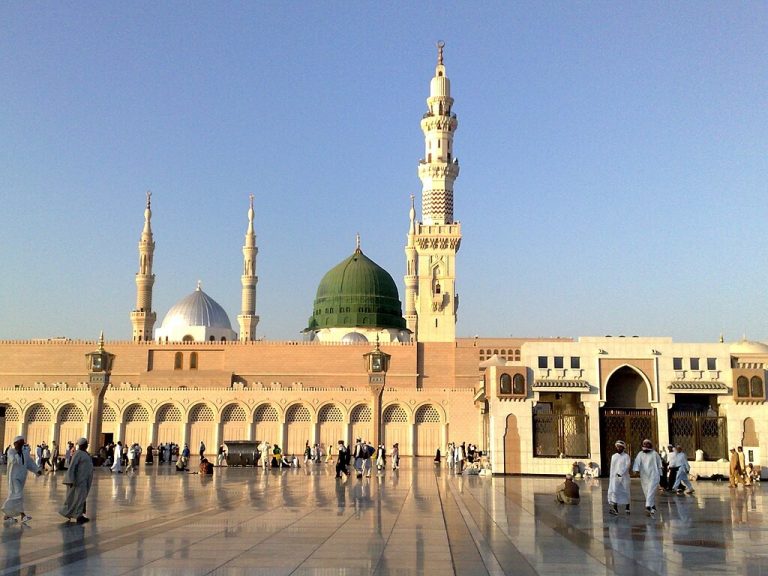
Masjid Nabawi is one of the sacred mosques mentioned in the Holy Quran. Allah SWT in Surah Al-Taubah says that the foundation of the Prophet’s Mosque was laid on piety.
Every pillar, window, and dome of Masjid Nabawi tells a story. These subtle secrets and signs honour historical events that have great significance in Islam. Even though the Prophet’s Mosque is a place known to every Muslim who has ever lived, there’s still a lot we don’t know.
It is the Hujrah of Prophet Muhammad (PBUH), the scared chamber is situated outside Masjid Nabawi and has a golden vault in front of it. It is the place marking Prophet Muhammad’s (PBUH) final residence and death. Masjid Nabawi has three Mihrabs. Post expansion and renovation, the main (or current) mihrab is the one used today by the Imam of Masjid Nabawi to lead congregational prayers. The second mihrab is called Ahnaf Mihrab or Suleymanyah. It is set behind the first one and constructed on the orders of Sultan Suleyman for the Hanafi Imam to lead prayers and the third one is called the Prophetic Mihrab, as it covers the entire area where Prophet Muhammad (PBUH) used to lead Salah, except where he placed his feet. Riadh-ul-Jannah – The Backyard of Paradise. s located within Masjid Nabawi. It is 15 metres wide and 22 metres in length, and some part of it is connected to the chamber of Prophet Muhammad (PBUH). It is recommended to pray inside Riadh-ul-Jannah as it is equivalent to praying in Jannah.
Some must-visit places inside Masjid Nabawi include:
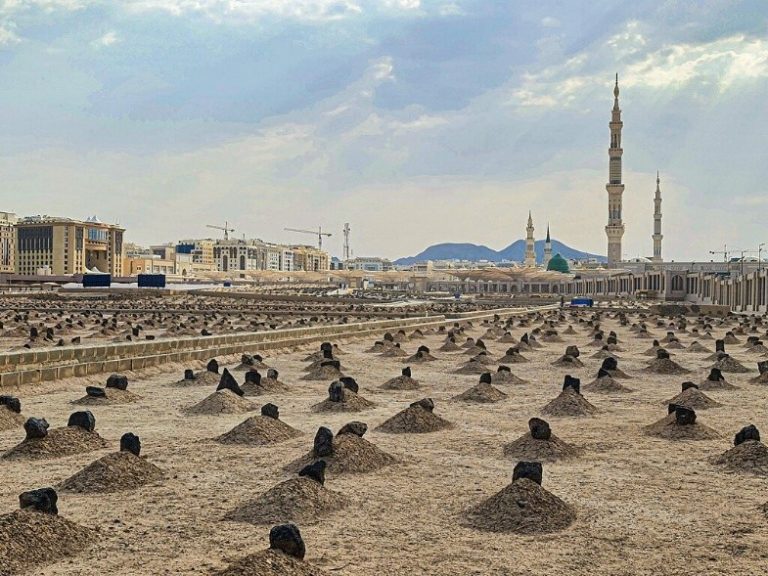
Jannat Al Baqi is the oldest and first designated Muslim cemetary in Madinah. The first man to be buried here was As’ad bin Zurara (ra), an Ansari companion, and the prophet (SWS) chose him to be buried in this place. Uthman ibn Maz’oon (ra) who died shortly after the battle of Badr. This cemetary is the resting place of a large number of relatives and companions of the prophet (SWS) including his beloved wife A’isha (ra) who had initially intended to be buried next to her father and husband (SWS) but gave up her spot to Umar (ra) upon his request.
Many of the other Mothers of the Believers were buried here also: Sawda bint Zamaa, Hafsa bint Umar, Zaynab bint Khuzaymah, bJuwairiya bint Harith, Umm Habibah bint Abu Sufyan, Safiyyah bint Hayy al Akhtab, Zainab bint Jahash, Umme Salamah bint Abu Umama (ra).The first member of the prophet’s (SWS) family, Ahl-al-Bayt, to be buried here however was Muhammad’s (SWS) daughter, Ruqayyah, who passed away in 624 CE.
2. Masjid Quba:
The Masjid Quba or Quba Mosque is a mosque located in Medina, first built in the lifetime of our Prophet Muhammad (PBUH) in the 7th century CE. It is the first mosque in the world, established on the first day of Muhammad’s emigration to Medina. Its first stone is said to have been laid by the prophet, and the structure completed by his companion’s called “Sahaba”. The mosque was subsequently modified across the centuries until the 1980s, when it was completely replaced by a new building that stands today.
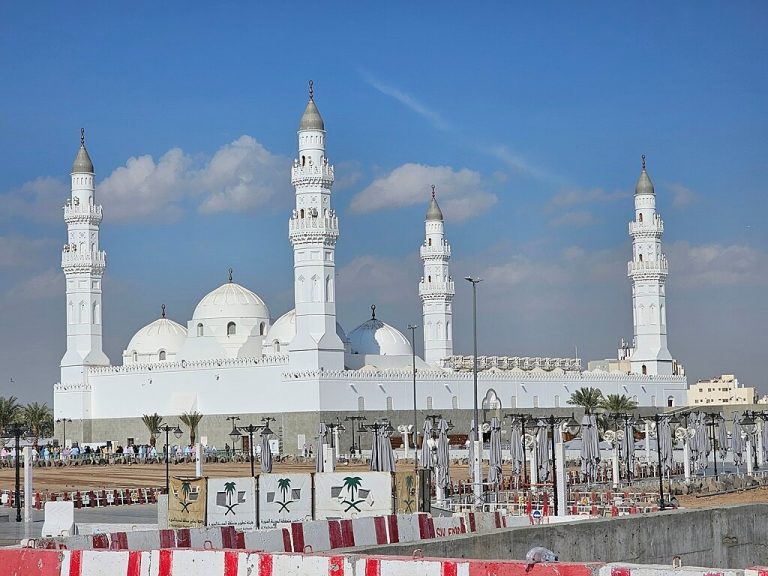
During the hijrah (migration) of our Prophet Muhammad (PBUH) from Mecca to Medina , he stopped in the village of Quba’ near Medina. He stayed there for 3 to 22 days. He established the mosque on the first day. Initially, the mosque was built 6 kilometres (3.7 miles) from Medina in the village of Quba’, before Medina expanded to include this village. The first mosque would have been oriented towards Jerusalem and our prophet rebuilt it when the qibla (direction of prayer) was changed toward the Kaaba in Makka. The mosque was repeatedly modified and expanded in later periods. Within 644 – 656 CE, it was expanded by Khalipha Uthman ibn Affan. Another expansion occurred in 684 CE, during the reign of the Umayyad Khalipha Abd al-Malik ibn Marwan. Within 705–715 CE, rebuilt by sixth Umayyad Khalipha Al-Walid ibn Abd al-Malik ibn Marwan. Its first “minaret” was added under Umar ibn Abd al-Aziz (r. 717–720). It was renovated in year 1044, 1160, 1333, 1436 and 1476. During the Ottoman era, Sultan Suleiman sponsored the reconstruction of the minaret and the mosque’s ceiling in 1543. Sultan Mustafa II renovated these same elements again in 1699. Major renovations and modifications took place in 1829 and in the following decade or so during the reigns of Mahmud II (r. 1808–1839) and Abdülmecid I (r. 1839–1861).
In 1388 AH (1968/1969CE), during the reign of King Faisal bin Abdulaziz, the mosque’s exterior walls were refurbished. The present-day mosque is the result of a complete reconstruction that began in 1984 under Saudi king Fahd bin Abdulaziz. It expanded the mosque’s size. Its capacity to accommodate 20,000 prayers. Following this expansion, the mosque featured four minarets and 56 domes. It also included accommodations for Imams and Muezzins, and a library. The mosque’s land area measured 13,500 square metres (145,000 sq ft), with the building itself covering 5,860 square metres (63,100 sq ft).
Performing two Rakaʿāt of Nafl Namaz/prayers in the Quba Mosque, is considered to be equal to performing oneʿUmrah. Muhammad (PBUH) used to go there, riding or on foot, every Saturday and offer a two rakaʿāt prayer. He advised others to do the same, saying, “Whoever makes ablutions at home and then goes and prays in the Mosque of Quba, he will have a reward like that of an ‘Umrah.”
3. Masjid al-Qiblatayn:
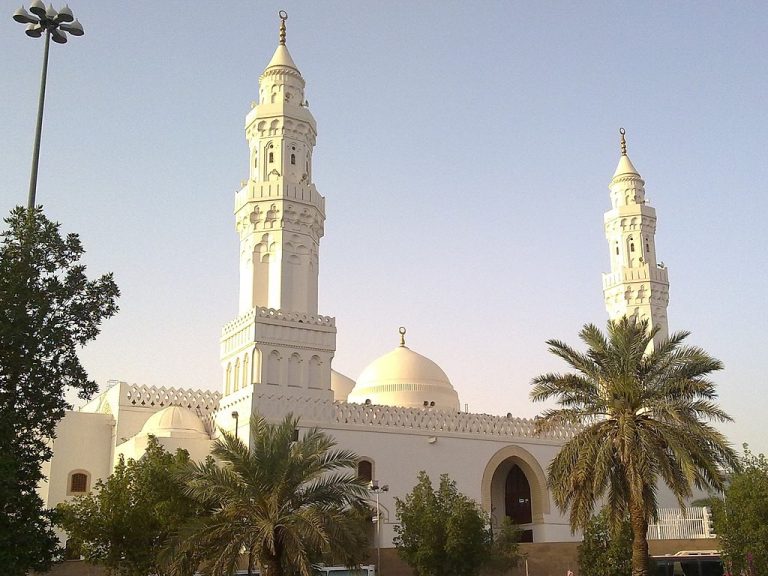
The Masjid al- Qiblatayn ’Mosque of the Two Qiblas’, is the place where the our Prophet Muhammad (PBUH) , received the command to change the Qibla (direction of prayer) from Jerusalem to Makka.
4. Mount Uhud:
Mount Uhud is a mountain north of Medina. It is 1,077 m (3,533 ft) high and 7.5 km (4.7 miles) long. It was the site of the second battle between the Prophet Muhammad (PUBH) and the polytheists of his tribe of Quraysh. The Battle of Uhud was fought on 19 March, 625 CE, between a force from the small Muslim community of Medina and a force from Makka, in north-western Arabia. The battle was fought at the valley located in front of Mount Uhud. The Battle of Uḥud was the second military encounter between the Meccans and the Muslims, preceded by the Battle of Badr in 624, where a small Muslim army had defeated the much larger Meccan army. Whilst heavily outnumbered, the Muslims gained the early initiative and forced the Meccan lines back, thus leaving much of the Meccan camp unprotected. When the battle looked to be only one step far from a decisive Muslim victory. which shifted the outcome of the battle. A breach of Muhammad’s orders by the Muslim archers, who left their assigned posts to despoil the Meccan camp thinking the war ended, allowed a surprise attack from the Meccan cavalry, led by Meccan war veteran Khalid ibn al-Walid, which brought chaos to the Muslim ranks. Many Muslims were killed, including Hamza ibn ‘Abd al-Muttalib, Muhammad’s uncle and foster brother. Muhammad himself got injured. The Muslims had to withdraw up the slopes of ‘Uḥud. The Meccans did not pursue the Muslims further, but marched back to Mecca declaring victory.
5. Masjid Al Ghamamah:
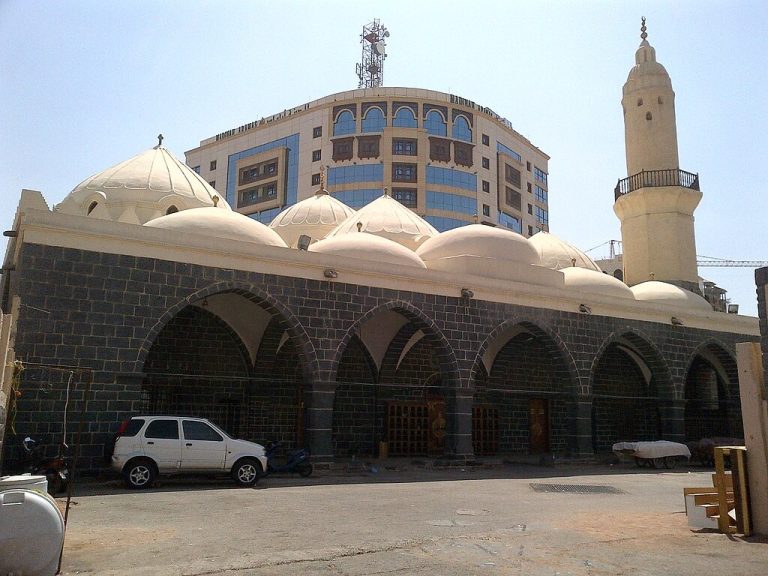
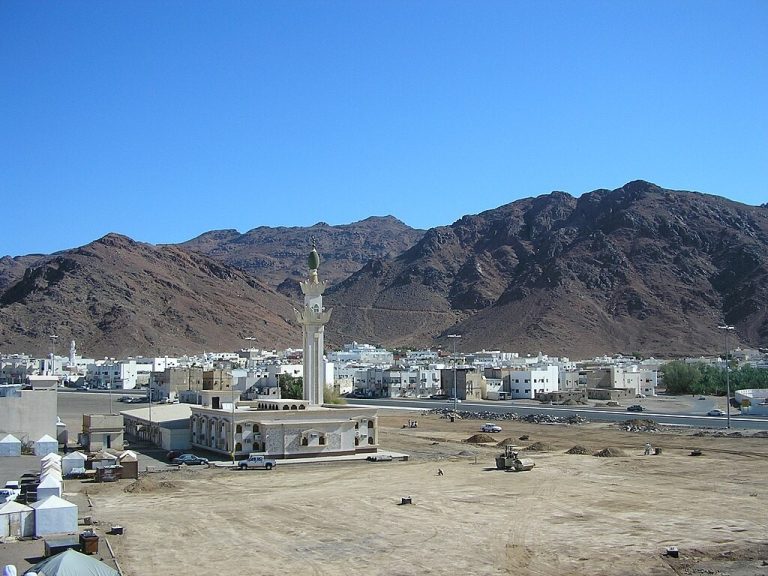
For a while, this mosque was closed for daily prayers because of its proximity to the Al-Masjid an-Nabawi. Quite recently, it reopened for prayer. Five–times prayers are held in the mosque, with an internal sound system to avoid the clash of sounds from the nearby Prophet’s Mosque.
The mosque is rectangular shaped, and made of two parts, which are entrance door and prayer room. The entrance door is also rectangular shaped and is 26 m (85 ft) long and is 4 m (13 ft) wide, and has five dome-shaped circles drawn on façade. The prayer room is 30 m (98 ft) long and is 15 m (49 ft) wide, and has six domes in the shape of a circle. The largest dome is at the top of the mihrab.
The mosque was built during the reign of the Khalipha Umar bin Abdul Aziz between 86 AH (704/706CE) to 93 AH (711/712CE), and renovated by the Sultan Hasan bin Muhammad bin Qalawan Ash-Shalihi in 1340 CE . It was renovated again by the Sharif Saifuddin Inal Al-Ala’i in 1622, and at the time of Sultan Abd-ul-Mejid I in 1859 during the Ottoman era, using new tools and the appearance resembles more or less what it is today. After that it was renovated again during the time of the Sultan Abdul Hamid II and by the Saudi government.
6. Wadi E Jinn:
Wadi E Jinn is a mysterious valley located 30km away from Madinah in the northwestern direction leaves the visitors in awe. It allures people who travel to Saudi Arabia. Especially during weekends and holiday seasons, people visit Wadi-e-Jinn to explore this surreal valley. the valley is known as Wadi-e-Baidah. Baidah in Arabic means egg. The valley draws this name because it resembles an egg, nestled between mountains on three sides. During the daytime, the valley remains quite serene and peaceful. However, at night people have reported incidents such as hearing unusual sounds and voices in the valley. Many people described the voices as telling them to leave the place as they did not belong there. Some people have also seen unexplained flames of fire in the valley. However, the most astonishing observation is that the vehicles magnetically move upwards towards the mountainous roads at this valley. Some people have even witnessed that water was thrown on the road only to flow upwards in the direction of the valley. People believe that there are jinns present in this valley.
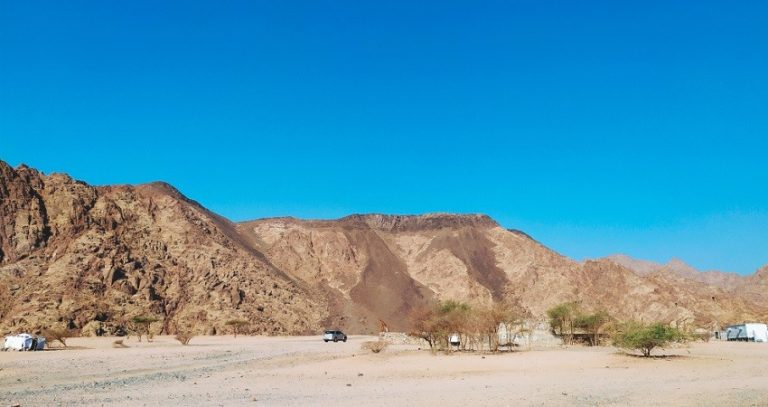
There is also Scientific Evidence Behind Wadi-e-Jinn’s Mystery. It says that it’s an optical illusion. These mysterious things happening around the valley due to it’s unique geographical location. Strong magnetic forces attract vehicles in the upwards direction reason why they start moving at a speed as high as 120km/hr. It explains why water flows upwards rather than flowing down. Reverse gravity, a common occurrence in rocky mountains is responsible for that.
Regardless of the theories circulating around the mysterious valley, it is one of the best attractions for tourists as well as pilgrims. People like to experience such unnatural phenomena as a car traveling by itself or water flowing upwards. Other than that, people from surrounding places come to enjoy the scenic beauty of this green valley located in the desert. Just about half an hour of drive from Madinah, you can reach the valley and cherish nature’s wonders. People often pack up food and water and go camping around the valley. Some people also stay at night to hear the mysterious voices proclaimed through generations. Sunrise offers a splendid view of nature’s fascination. The clear blue lake gives a refreshing feel in the scorching desert. Occasionally you may spot wild camels while you visit Wadi-e-Jinn. The best time to visit the valley is early in the morning to avoid midday scorching sun. During the period of November-January weather is quite pleasant and you may visit Wadi-e-Jinn anytime during this period.
7. Masjid Al-Hudaibiyah:
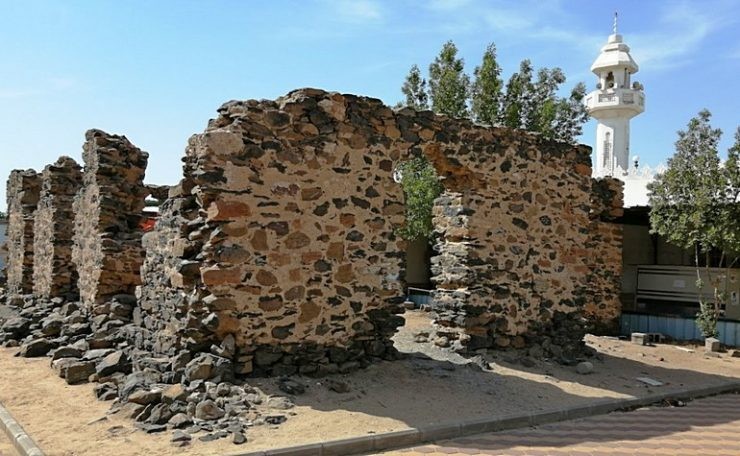
Masjid al-Hudaybiah is in the location where a peace treaty was made between the Prophet (PUBH) and the Quraysh in 6 AH, which became known as the ‘Treaty of Hudaybiah’. There exists a historic mosque and a new one next to it. Hudaybiah also functions as a Miqat for pilgrims to enter into the state of Ihram. The treaty helped to decrease tension between the two cities, affirmed peace for a period of 10 years, and authorised Muhammad’s followers to return the following year in a peaceful pilgrimage, which was later known as the First Pilgrimage. However this treaty was broken in two years, which led Muhammad to march against Mecca in 630 with an army of 10,000 men.
The main points of Treaty stated:
The Muslims will return to Medina without performing the pilgrimage but will be allowed the following year and would stay in Mecca for three days during which time the Quraysh will vacate the city. The Muslims will carry no weapons except sheathed swords
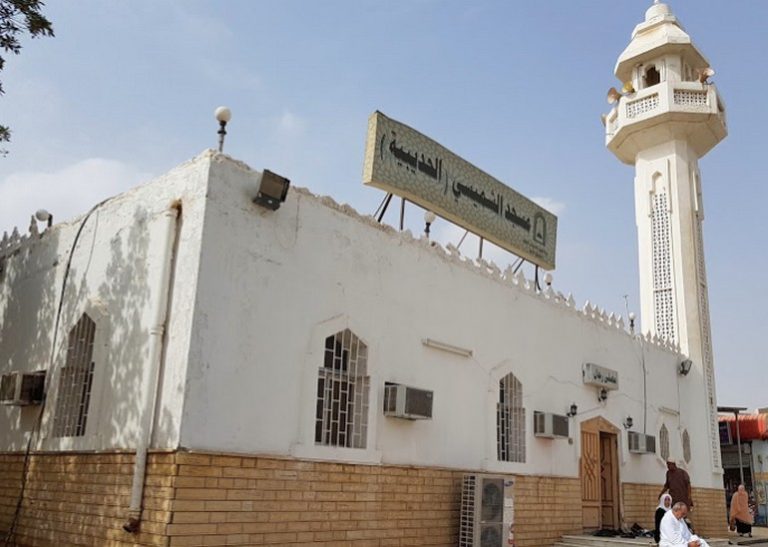
The remains of the old stone mosque are still present. The new mosque is known as Masjid Shumaysi and has modern facilities to enable pilgrims to get into the state of Ihram for performing Umrah.
6. Dar Al Madinah Museum:
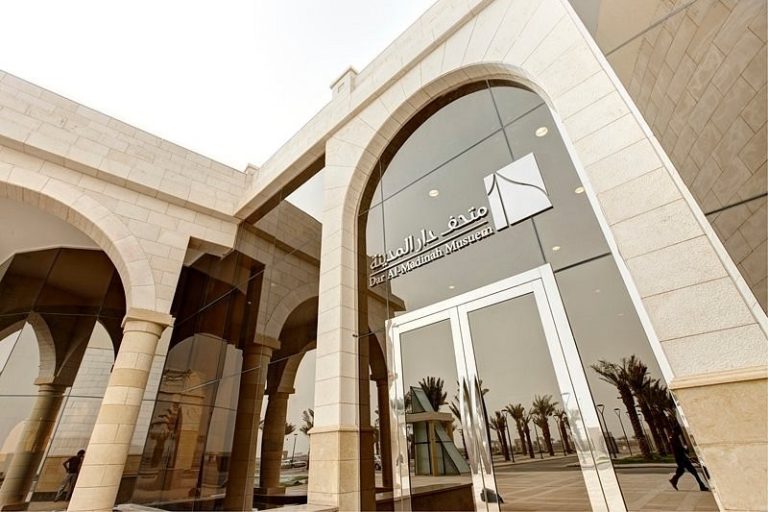
The Dar Al Madinah Museum is a museum in Al-Madinah, that exhibits Al-Madinah heritage and history featuring different archaeological collections, visual galleries and rare images that related to Al-Medina. It is a spiritual haven built to preserve the Seerah of the Prophet and to invite hearts into the time and space of his blessed life. The museum exhibits around 2,000 rare artifacts that capture the heritage and culture of Al-Madinah and document the landscape, the people and how it has been shaped over the years. It is the first and biggest museum that specialized in the history of Almadinah and its deep heritage. The museum highlights the history of the city of our beloved prophet, peace be upon him, as well as its valuable heritage and great ancient civilization. The museum displays big collection of hand built models that shows you simulation of the actual old landmarks of the city as well as a big collection of rear pieces and rear shoots of the city and its history.
The Museum’s Three Purposes:
One of the most awe-inspiring aspects of this museum is its carefully curated collection of exhibits—each one a door into a different chapter of Islamic history. Here are some of the treasures you’ll find:
Visiting Dar Al Madinah Museum is not simply about history—it’s about rekindling your connection with Rasulullah (SWS). It’s about walking in the footsteps of the Companions, hearing echoes of revelation, and seeing the layout of a city that was built upon mercy, wisdom, and divine light.
Other places to visit: